


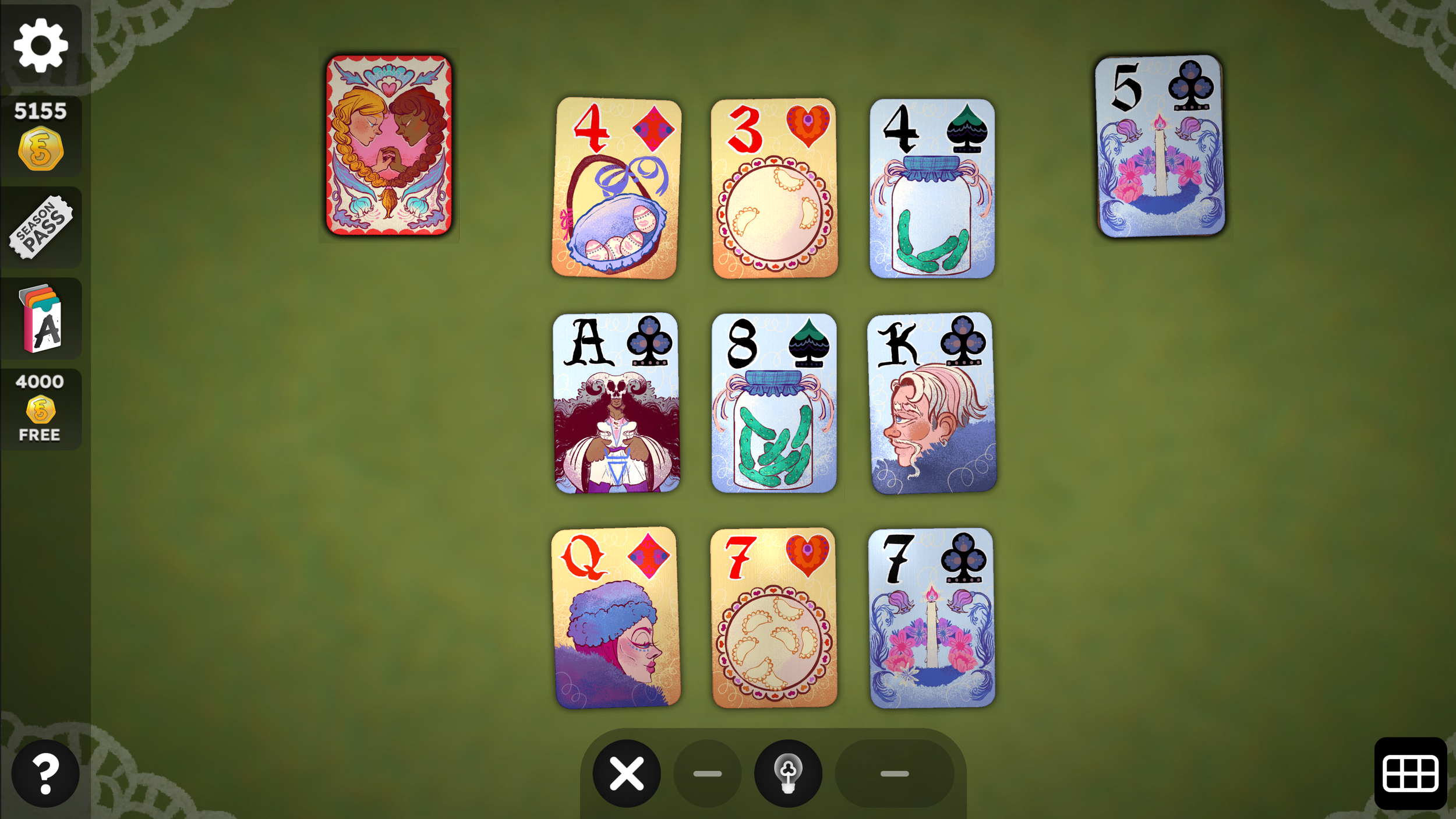
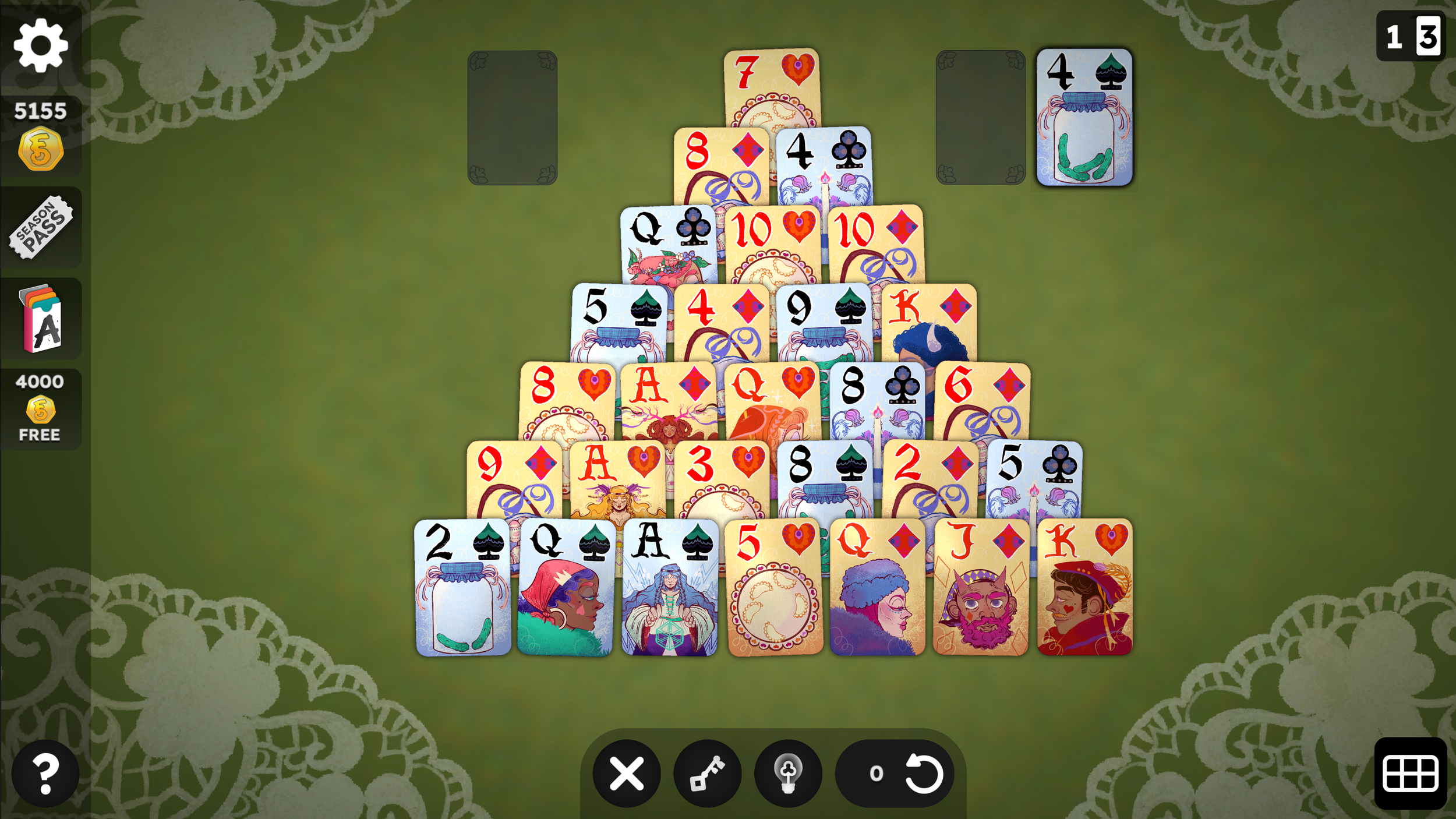
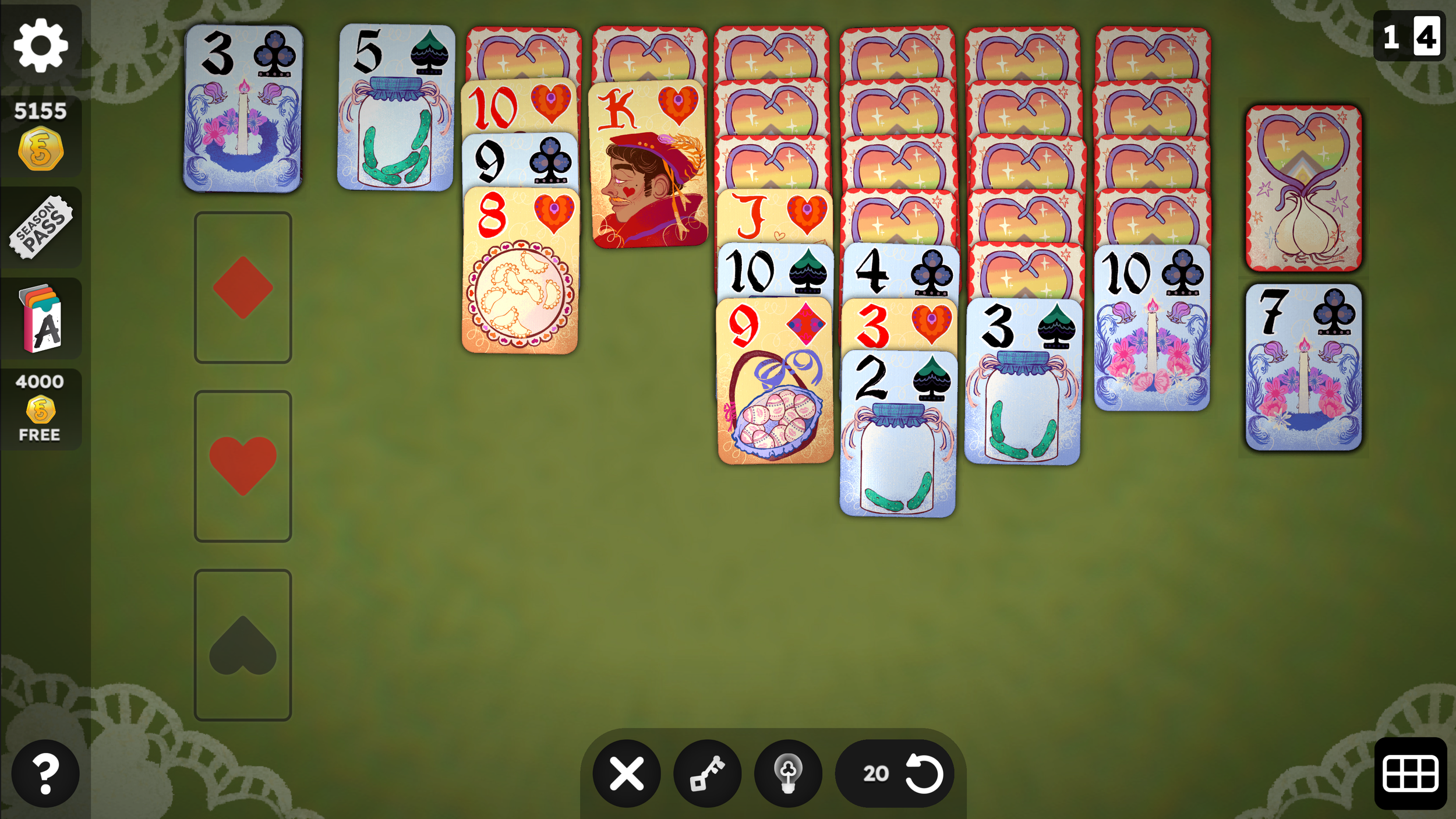
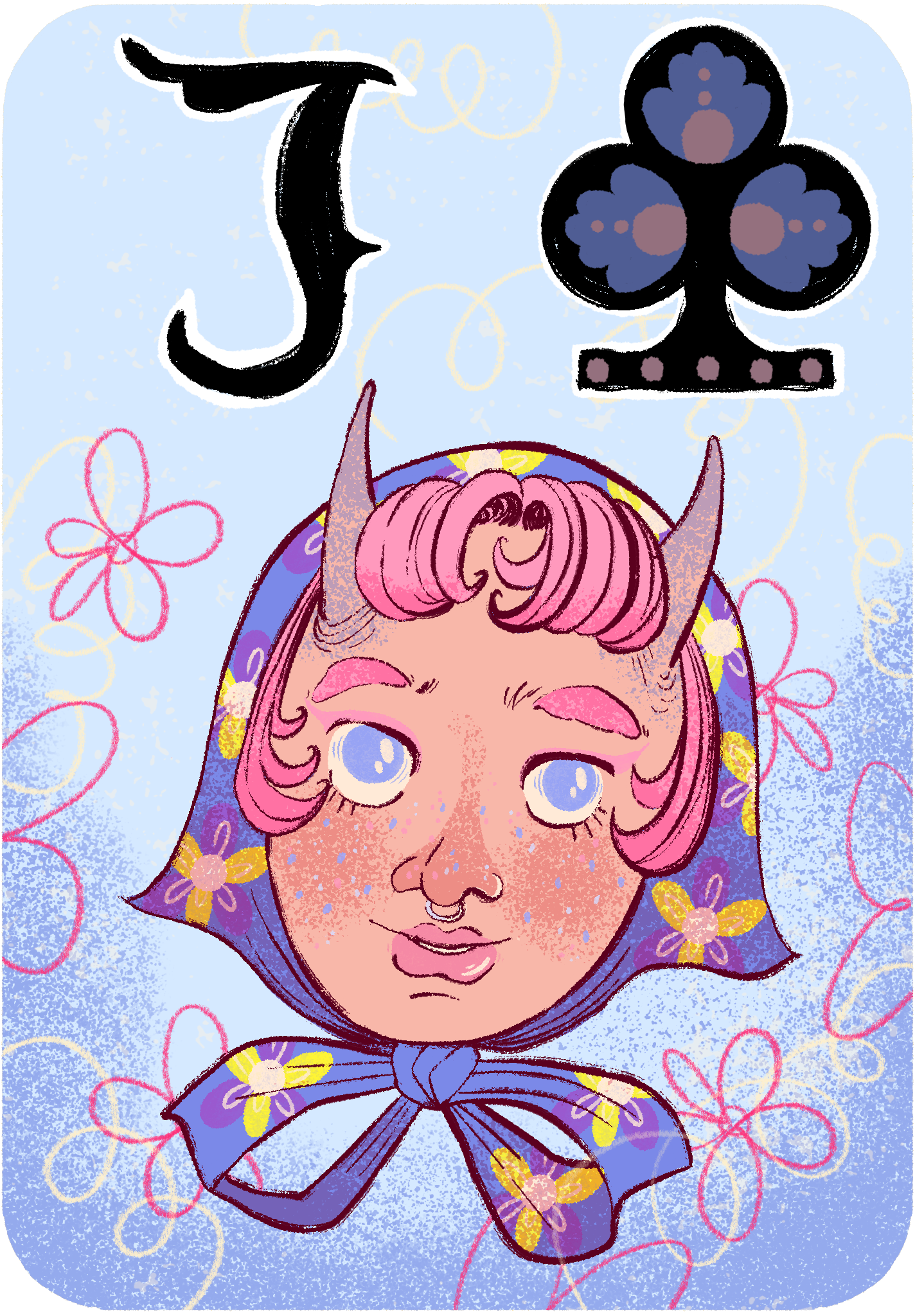
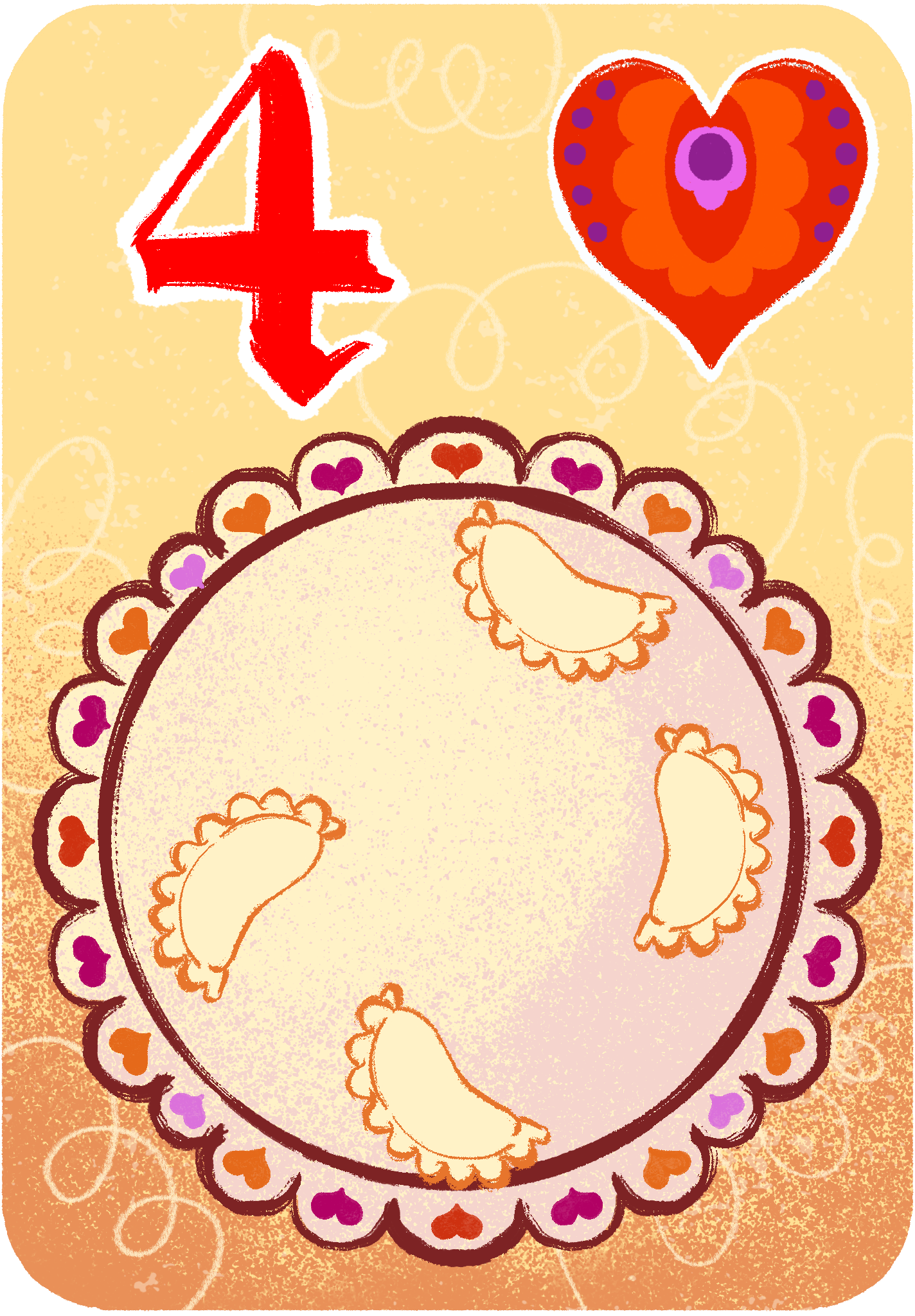
Happy Pride month to all of you lovely creatures! I bring news: my custom card deck packed with unapologetically gay Eastern European shenanigans is now LIVE in the Art of Solitaire game, and I’m so excited to share it with you!
Read below for this Pride-special deep dive into my design process and all the fun folk elements you can find on each card!
Get the Art of Solitaire app to start collecting my deck and grab extras like digital stickers and wallpapers!
The physical, printed deck will appear in the future! Stay in touch via my socials or newsletter to not miss the launch of the physical cards!
But first a little bit of context, in case you’re new here (in which case, hi, join us!):
It won’t come as a big surprise that my personal artwork is heavily inspired by what I’m passionate about most: whimsical mythology, playful storytelling and sharing my Slavic heritage through a queer and inclusive lens. I have toyed with designing a card deck in the past, and been asked about potential tarot deck projects, but the scale of it was daunting (and there are so many incredible tarot decks out there already!). It remained on my ever-growing project wish list.
You can imagine my absolute delight when I was approached by the Art of Solitaire, an indie game studio creating unique, relaxing solitaire card games. The best bit? They commission diverse artists and already they have released over 70 wildly creative virtual decks to collect and play with (the embroidered one by Camille Carpentier is one my personal favourites!).
Santiago Taberna (Art of Solitaire’s creative director) embraced all my strange ideas. While his direction was incredibly helpful to ensure all the assets are clear and functional within the game, he also gave me lots of creative freedom. I nearly jumped with joy when I saw that the team wants me to make this deck as personal, queer and Polish as I could possibly want. I was so so excited to start working on this project - and it wasn’t a small one either, with over 52 different assets needed to be completed and optimised.
So how does one approach a big commission like this, and what’s the creative process like? Let’s dive into the Queer Folk card deck!

Planning the deck from the start:
With so many visual assets to create and a lot of space to be creative and playful, I realised I needed to pin-point some goals for this card deck so I don’t get overwhelmed with my own chaotic ideas! This project was my very first foray into the mobile games area and I kew that I might need to adjust some of my usual process so my creations are fully functional within the digital gaming space. As a chronic organiser and to-do lists enthusiast, here are the main goals I eneded up with:
Keep in mind the purpose of this card deck (merging the mobile solitaire game with a collectible art appeal!)
Organise the suits and values in a way that incorporates as many official Pride flags as possible, to represent a diverse range of identities under the LGBTQ+ umbrella
Make each suit visually distinctive, so the cards are easy to tell apart quickly in the game
Select the Slavic folklore elements that seem representative, and universal enough so people from different places in Eastern Europe can relate to them.
I knew that I wanted to include some powerful pagan Slavic deities (like Perun or Mokosha), as well as traditional folk dress, regional references and internationally recognisable things like pierogi (dumplings) or pickles. Taking the folk elements that we see as more historical and traditional and intertwining them with the contemporary pop culture is very much my jam, so that was also a strong driving force for the designs.
Admittedly, that is a lot to consider!
Starting the design from characters of queens, kings and aces seemed like a good approach.
This is also when, after chatting about the commission with my lovely partner, she suggested something that triggered a eureka moment. If we wanted the deck to be playful and a bit cheeky, how about making the queens drag queens, the kings drag kings, and aces…well, aces???
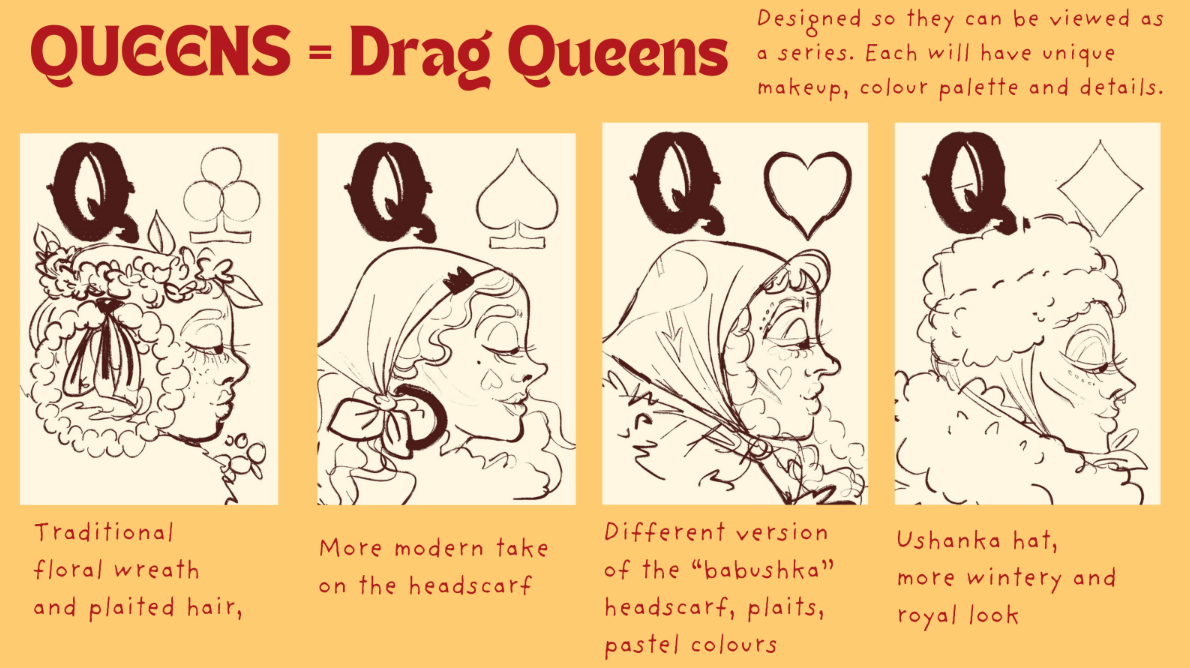
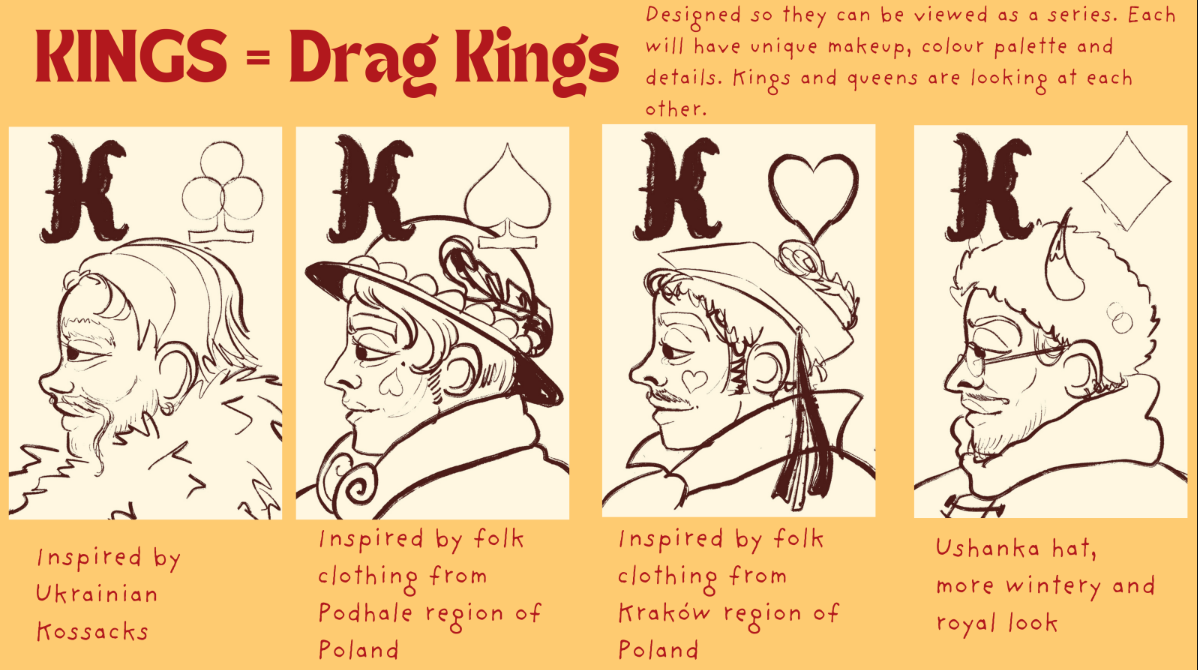
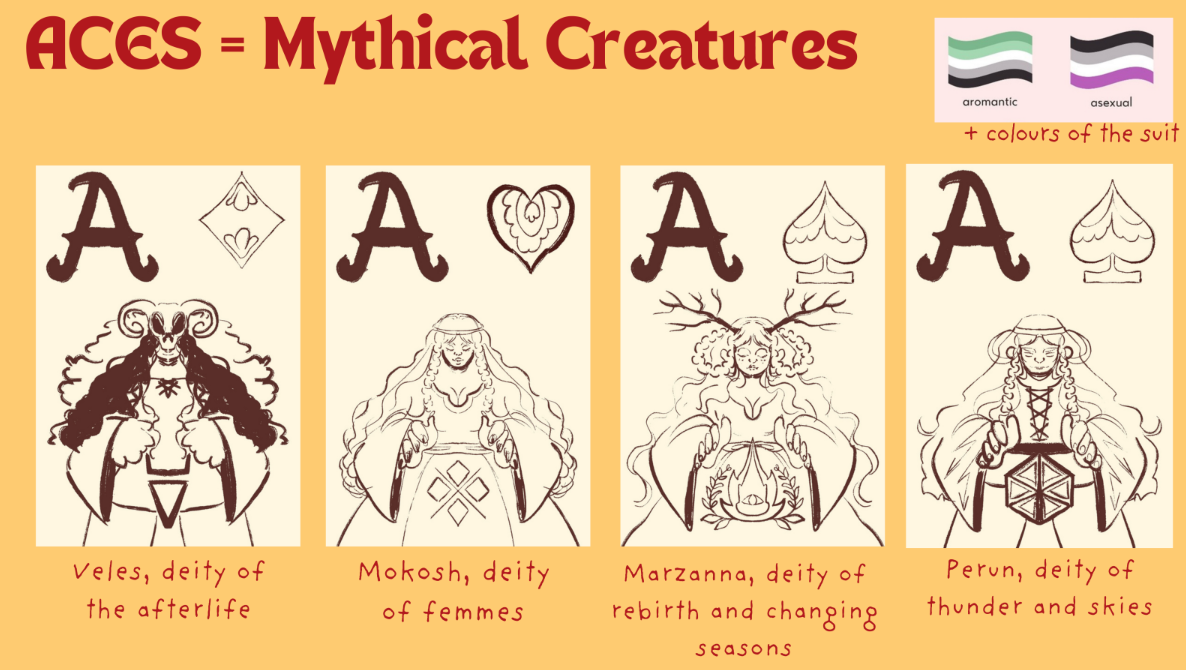
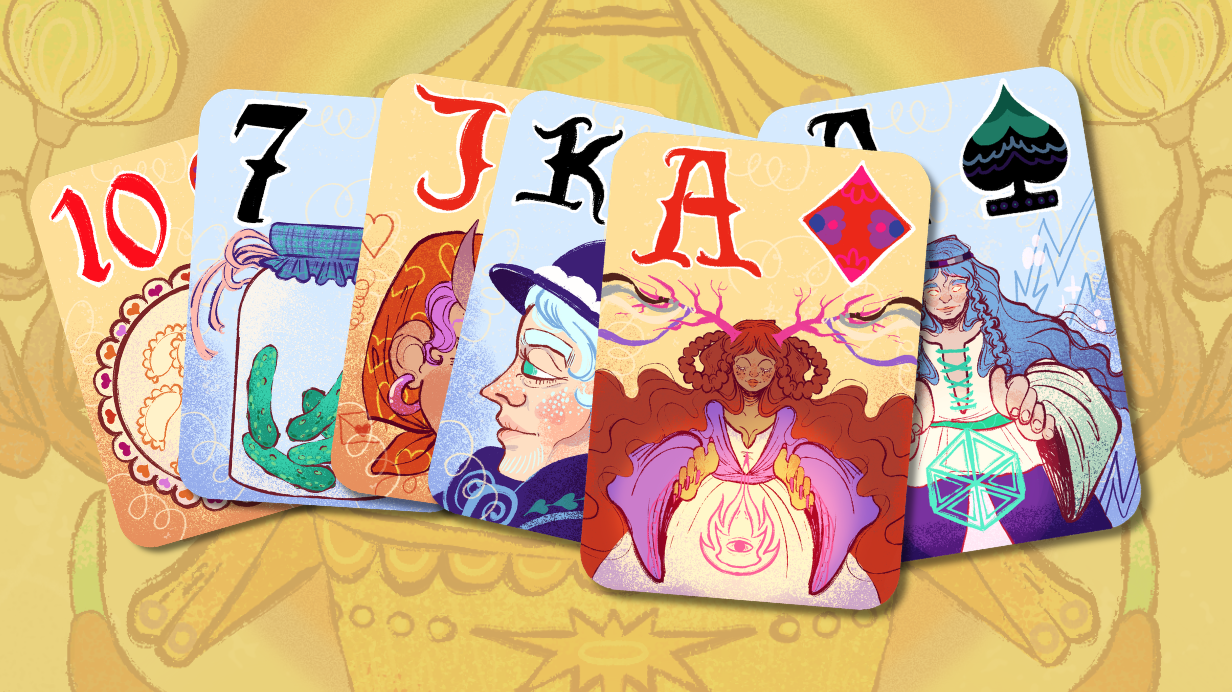
I got to sketching right away. As usual when working with clients, I have put together a PDF with early sketches, ideas and notes for the creative director to review. You can see a couple of pages from it below:
2. Choose a Pride flag for each suit!
Organising all my ideas and making sure the deck checks all the boxes was a bit tricky. I decided to pick a pride flag colour palette for each suit (four suits would accommodate four pride flags = L, G, B, T), and then have cards with additional colours (like the Jacks with non binary flag or aces with asexual flag). Each suit symbol would also have a simple pattern based on the folk patterns of the Lowicz region in Poland.
Once all the “main” figures were planned, I moved onto the value cards. If these were to be used in game like solitaire, where you stack cards in order, why not make each suit a mini series? This is what I ended up with:
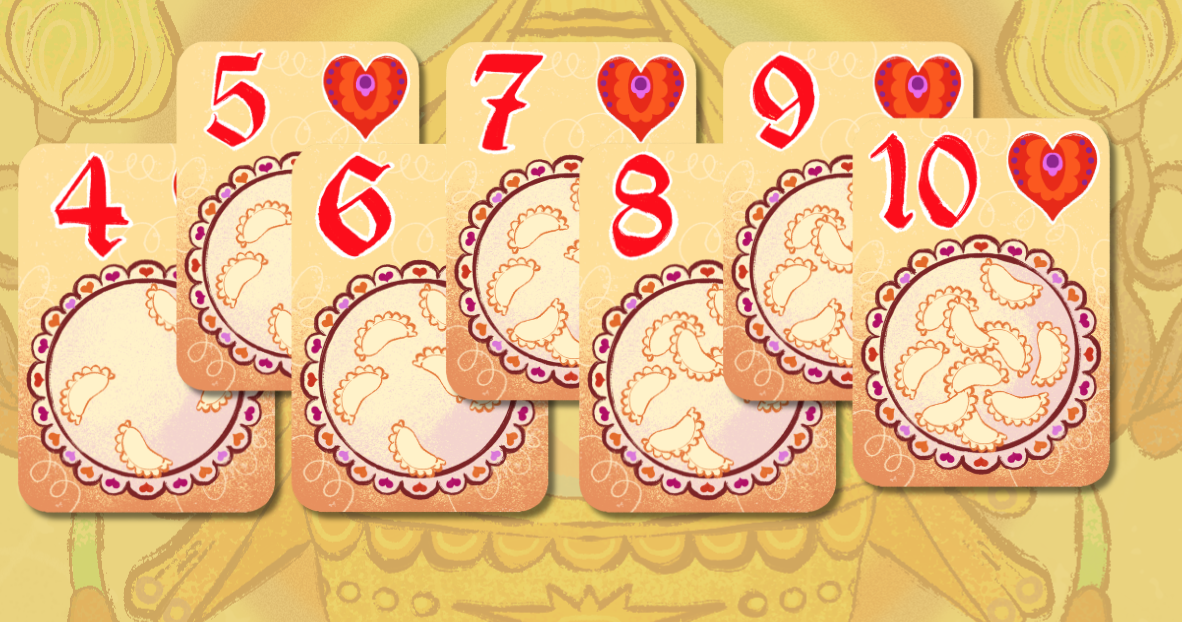
Hearts = Lesbian Flag and sapphic dumplings (somehow a suitable combination?)
Pierogi (Polish word for dumplings) simply had to appear somewhere! My tribute to these delicious, soft pockets of dough filled with anything you can imagine (my favourite filling: cabbage and forest mushrooms). A cute plate starts with two pierogi (two of hearts) and fills up until ten. It’s a pretty simple progression:
Clubs (which I also tenderly call broccoli) = Trans flag and a midsummer wreath
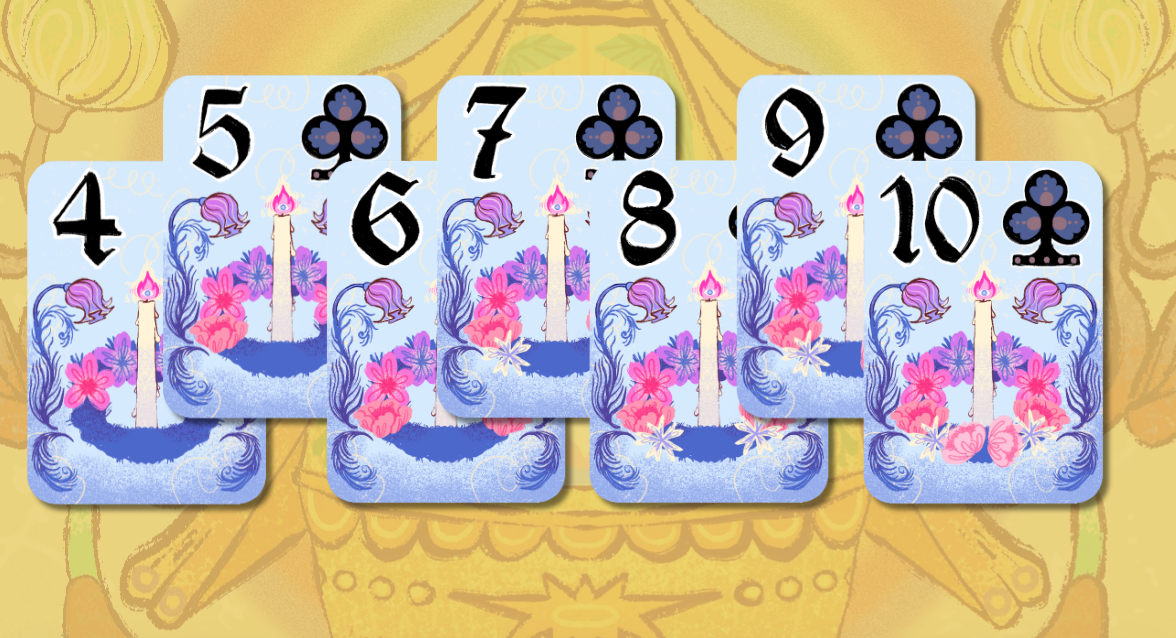
The broccoli suit is dedicated to the transgender Pride flag. It features a Kupala Night (Summer Solstice) wreath. In this midsummer custom, women would make floral wreaths, attach candles to them and send them on a river or lake, waiting for their loved one to find their wreath. A mythical fern flower was believed to bloom this one night of the year, and people would venture into the woods to find the magical flower to make their wishes come true.
I imagine this night of midsummer festivities would also be a great occassion for queer couples to find some privacy and romance :>
The wreath starts with two flowers, with more appearing on each value card. I felt that the candle and wreath speaks to the uniqueness and resillience of our trans siblings. Here are some of the cards:
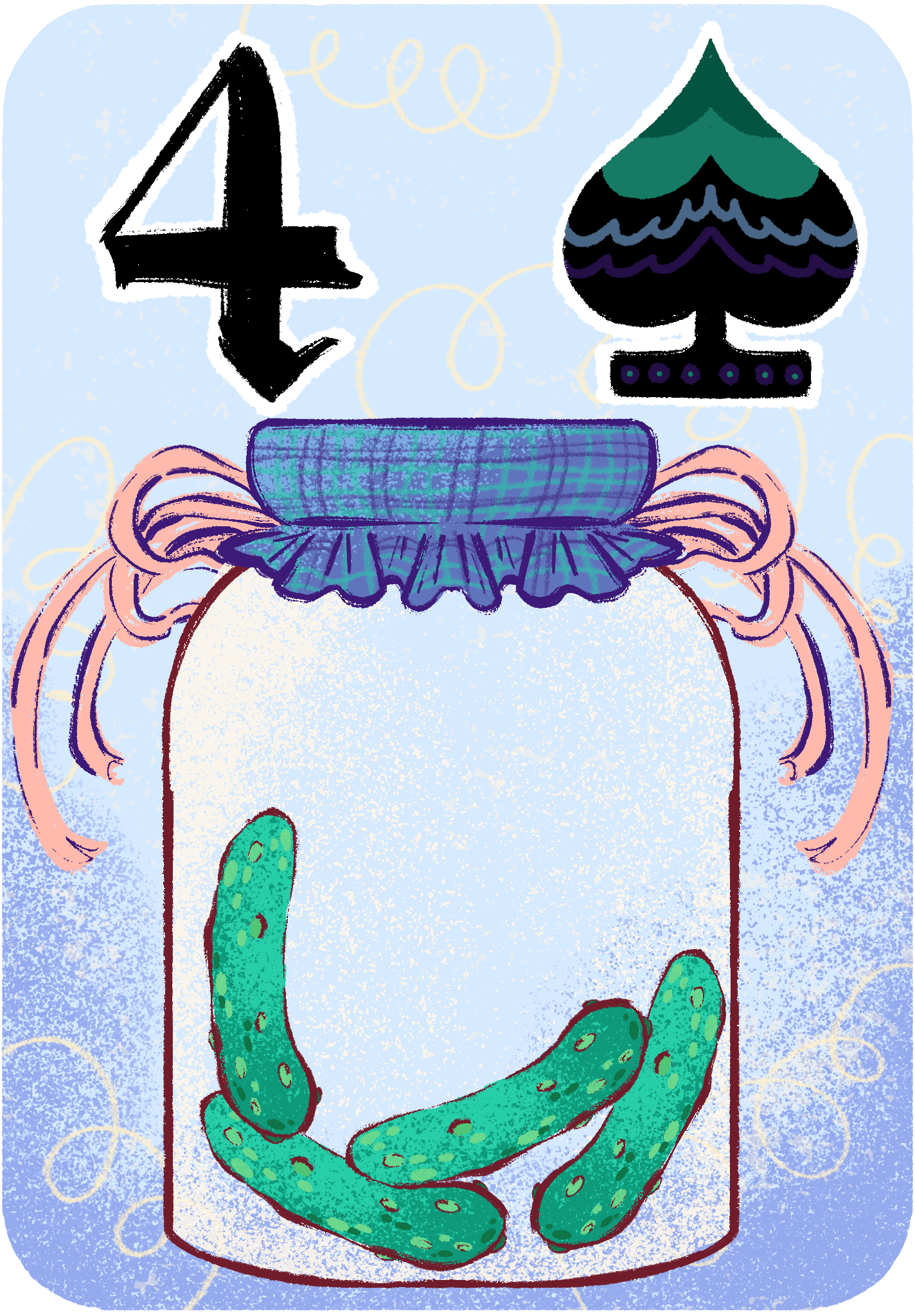
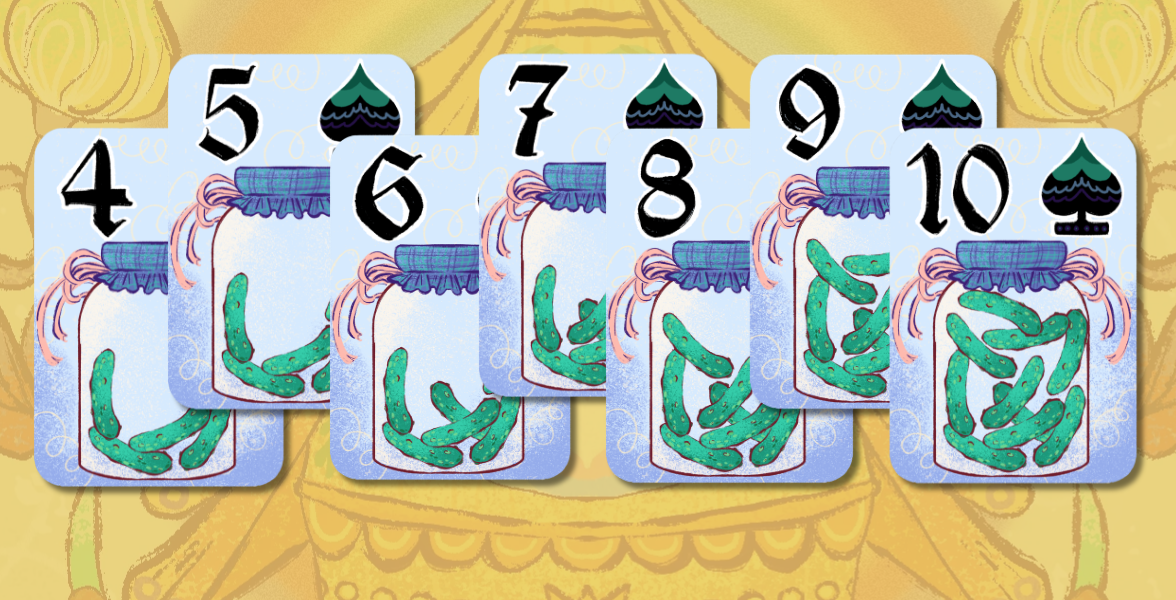
Spades = Gay flag and pickles (it had to be done, sorry not sorry)
You might have gotten that this deck features designs of…varied levels of sophistication? Unfortunately I simply can’t resist a cheeky design! The spades appear in the colours of the gay Pride flag, and the choice of a jar of gherkins seemed almost too perfect to not appear on this deck.
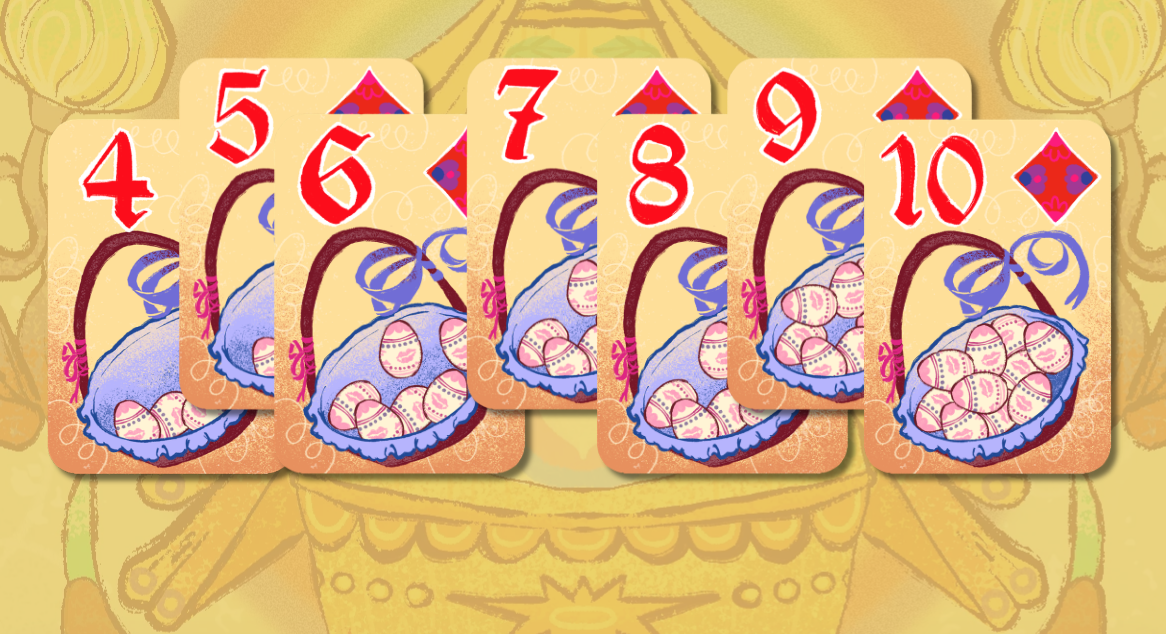
Diamonds = Bisexual flag and kissy eggs (please read on, I’ll explain)
The eggs in question are pisanki - the hand painted Easter eggs. The tradition of decorating eggs in spring time comes from way before the Christianity appropriated this custom. The egg itself symbolises new life and new beginnings. The pisanka eggs are painted in countries like Poland, Ukraine, Romania or Bulgaria.
On these cards they appear with a modern twist as a basket of kisses :>
3.Refining the main figures!
Once the idea for the kings, queens and aces was set, the time came to assign them to suits, pick colours and fun little details (definitely my favourite part). As you’ll see below, some of the cards are a direct reference to mythical creatures or elements of folk clothing, while others are a playful interpretation of tradition.
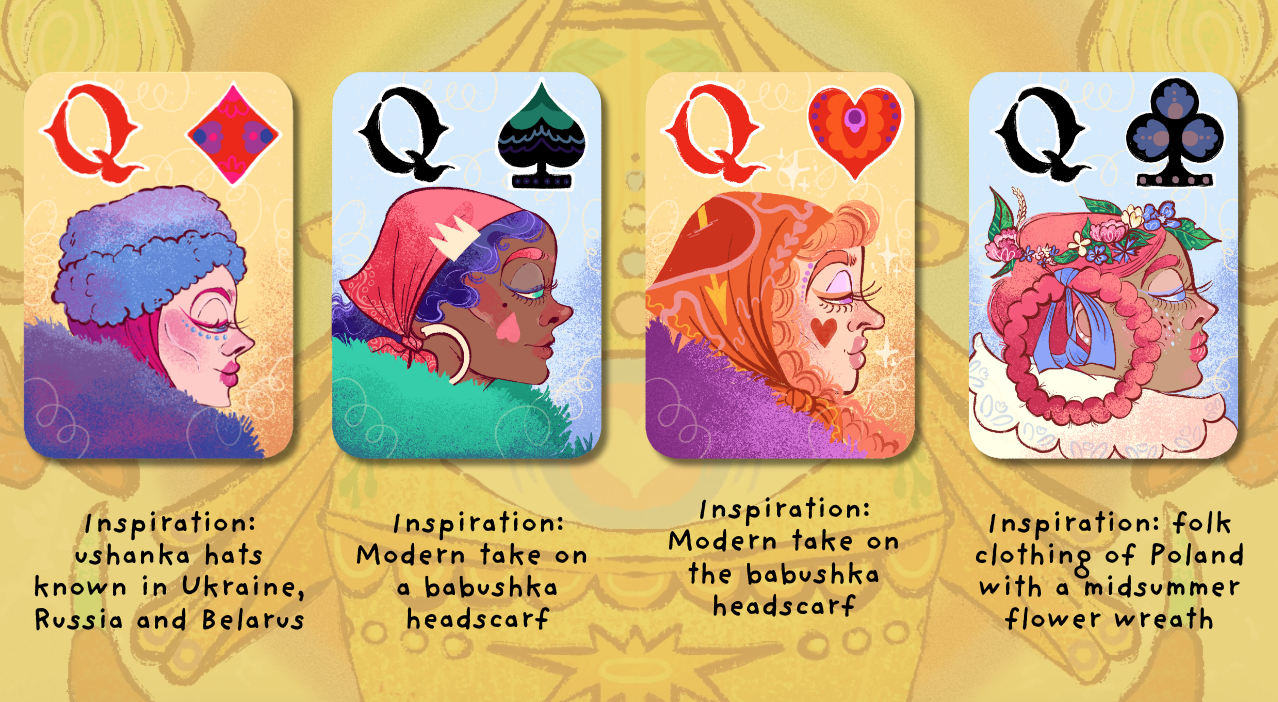
Queens = Drag Queens!
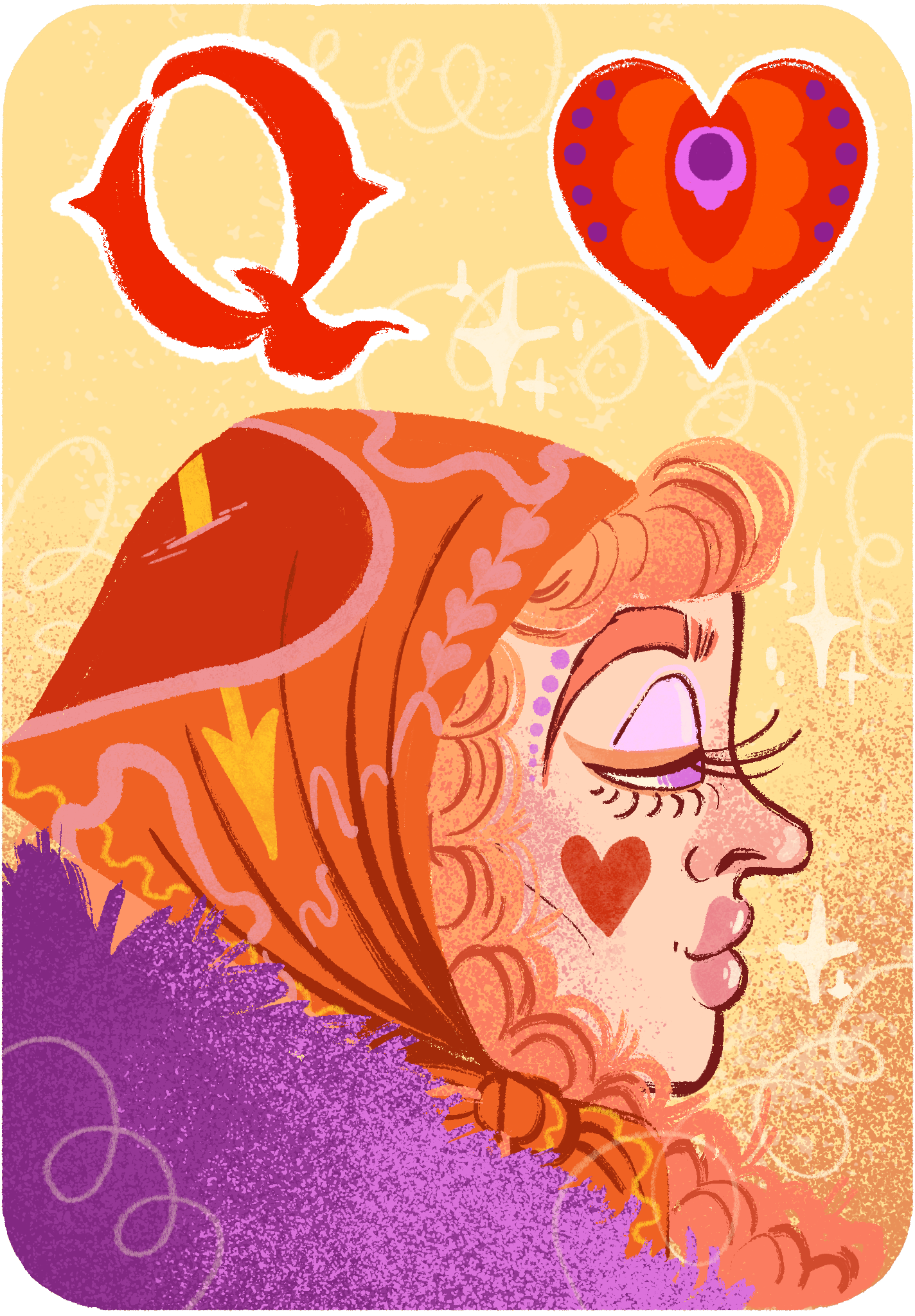
All the queens wear the colours of the Pride flag visible on their suit, and what fabulous outifts these are! I had so, so much fun dressing them up! We have:
Drag Queen of Diamonds (Bisexual Flag) - Inspiration: winter wear and elegant ushanka hats known in Ukraine, Russia and Belarus.
Drag Queen of Spades (Gay Flag) and Drag Queen of Hearts (Lesbian Flag) - Modern takes on the babushka headscarves.
Drag Queen of Clubs (Trans Flag) - Inspiration: folk clothing of Poland (white lacy shirt collar, thick plait with ribbons) and the midsummer flower wreath.
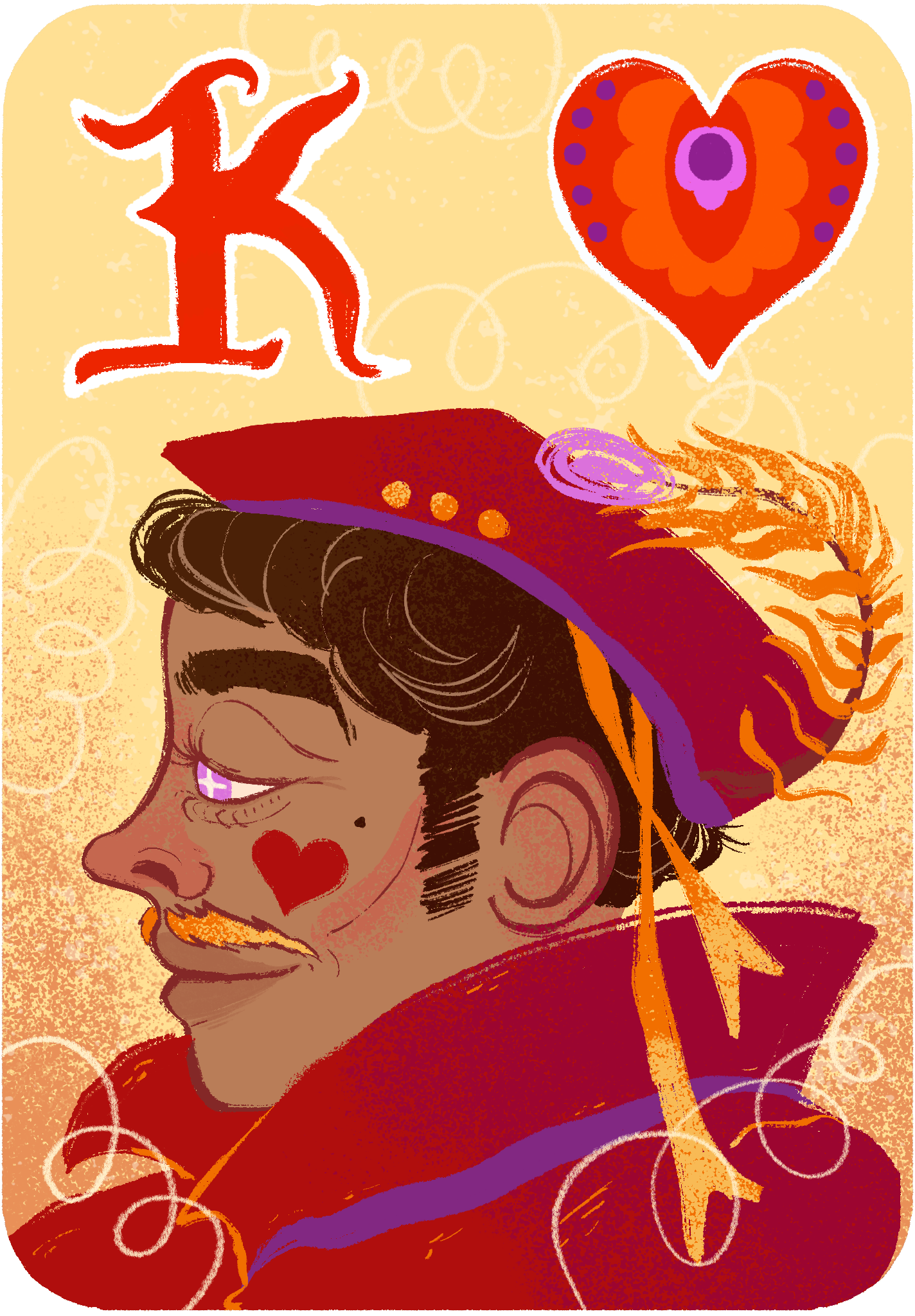
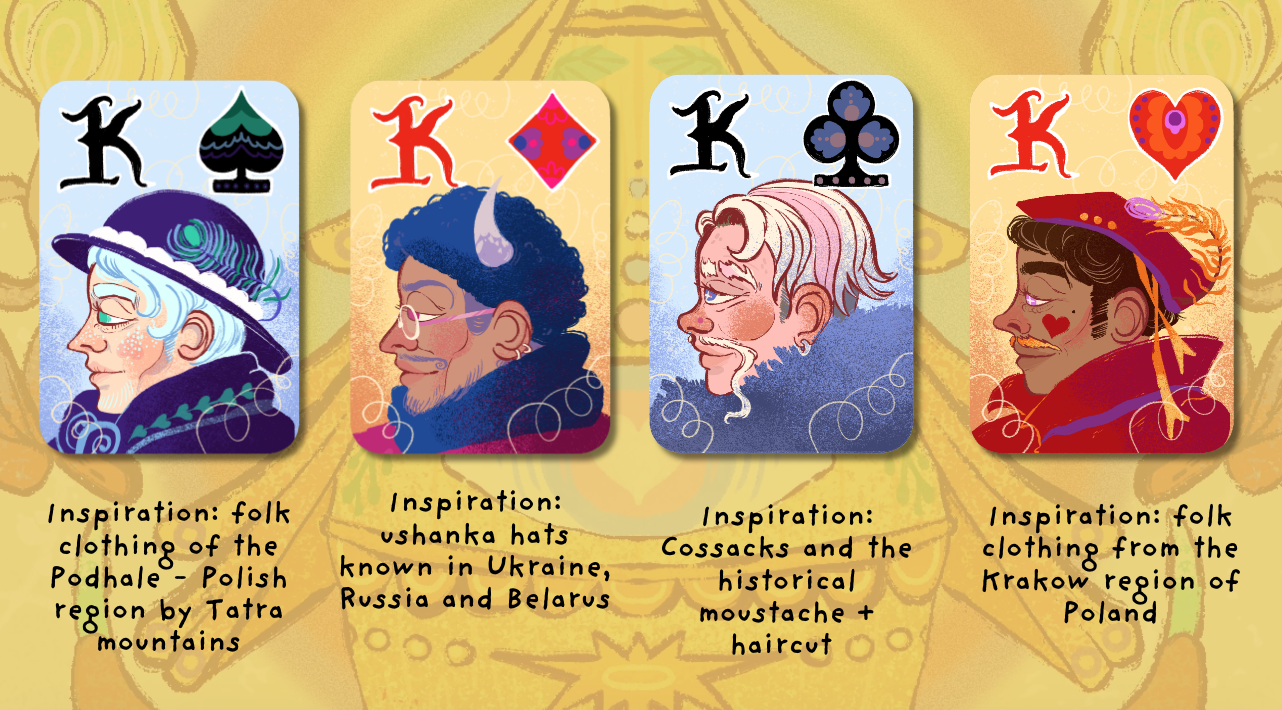
Kings = Drag Kings!
Designed to be consistent with the queens, both groups looking at each other.
Drag King of Diamonds (Bisexual Flag) - Inspiration: winter wear and elegant ushanka hats known in Ukraine, Russia and Belarus.
Drag King of Spades (Gay Flag) - Inspiration: The traditional folk clothing known in the Podhale region of Poland, near Tatra mountains.
Drag King of Hearts (Lesbian Flag) - Inspiration: Traditional clothing from the Polish region around Krakow (especially that hat with the feather).
Drag King of Clubs (Trans Flag) - Inspiration: Cossacks and characteristic moustache and haircut.
Aces = Aces! (…and also powerful deities)
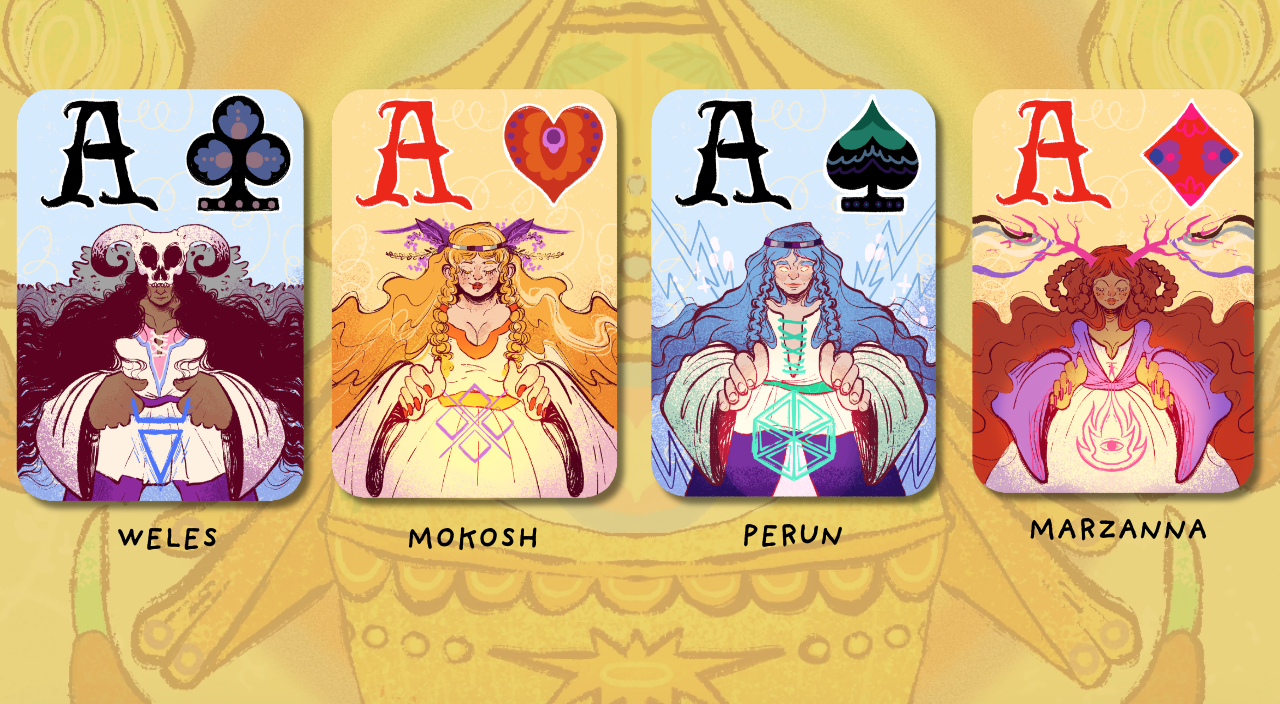
As powerful cards, aces needed to really stand out from the rest of the deck. It was a perfect opening to share some of the mythical creatures - powerful deities, one of many celebrated by the Slavic people in the pre-Christian times. These aren’t really “main” deities, as Slavic mythology doesn’t have a strong hierarchy. I simply picked the ones that are interesting and powerful, and could be illustrated with symbols and attributes. I have illustrated these deities before - in fact, you can find them all in my Slavic Mythology book and on my illustrations.
Quick note, keep in mind that my descriptions below are incredibly small and reductive, as each deity can be found under different names and with a huge variety of worship customs depending on the region! But here’s the general idea:
Ace of Clubs (Trans + Asexual Flag) - Weles
Veles is a deity of the underworld, believed to rule the land of Navia, where souls of the dead eternally wander. Like many Slavic deities, he is a shapeshifter (turning into a bear or a giant snake) and has many domains. He’s also a patron of livestock, and is often seen as the opposite of Perun.
Ace of Hearts (Lesbian + Asexual Flag) - Mokosh
The goddess of the soil and fertility, often seen as the patron of the femmes and their work. She can be seen as a patron of love, birth, water, and sometimes also as a maternal figure.
Ace of Spades (Gay + Asexual Flag) - Perun
He wields thunder, rules the skies and can be seen as one of the main Slavic deities. The oak is worshipped as Perun’s sacred tree and a symbol of strength.
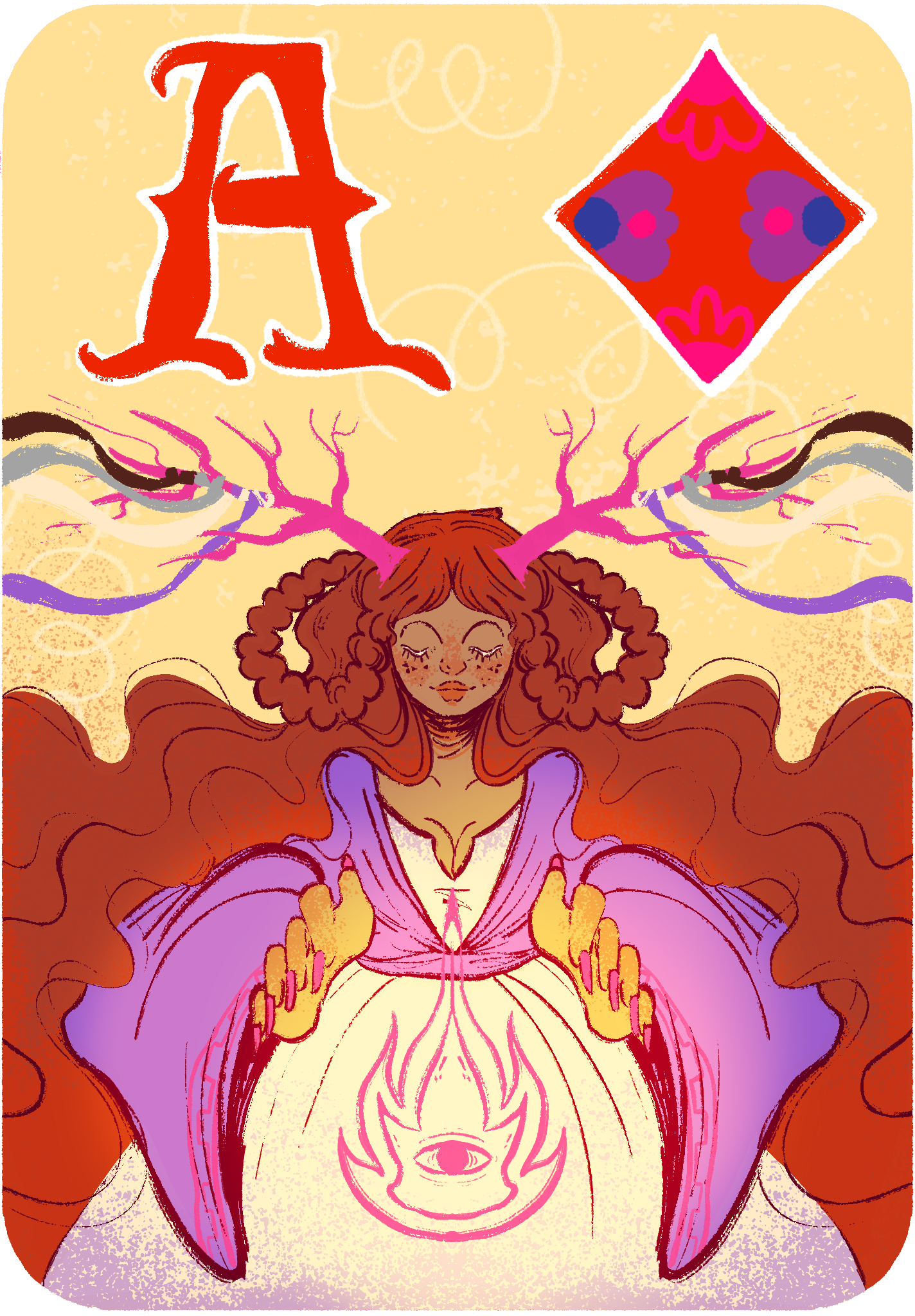
Ace of Diamonds (Bi + Asexual Flag) - Marzanna
One of the lesser known deities, Marzanna is one of my personal favourites. Slavic deity of death, rebirth and changing seasons, celebrated as the winter turns into spring. It’s believed that her death at the end of winter makes space for the birth of god Jarylo in spring. The cycle repeated each year.
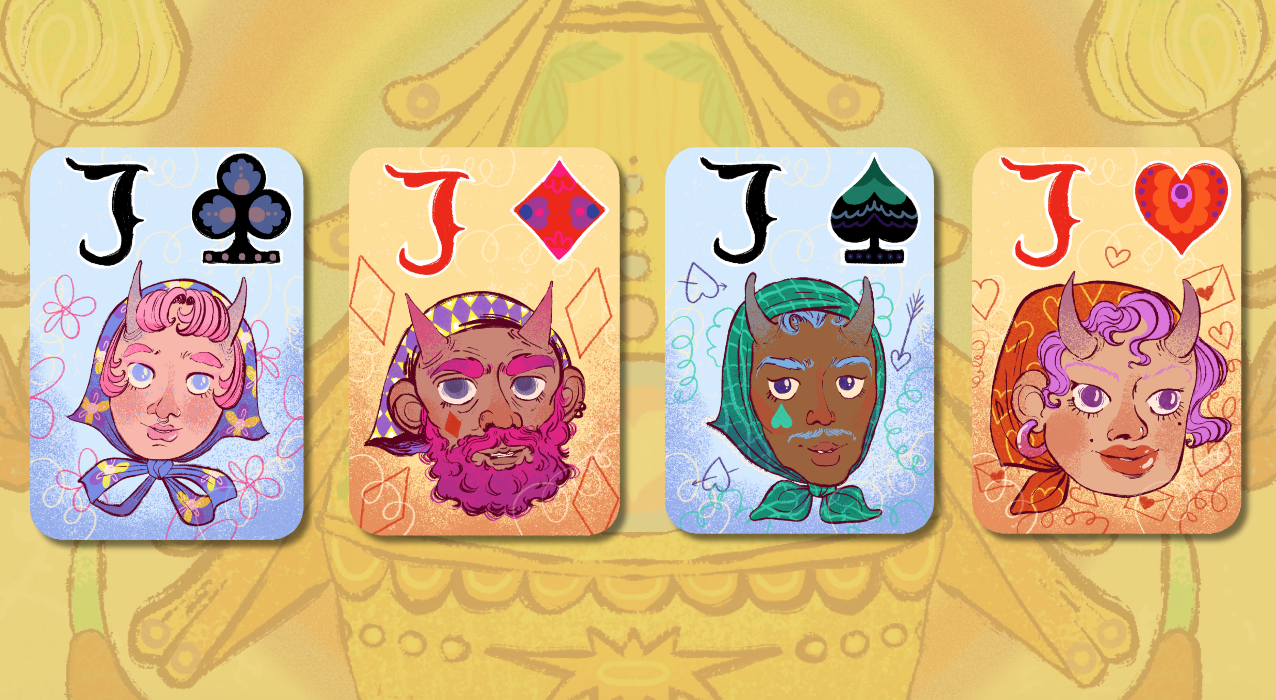
Jacks - enby babushkas
Jacks feature a bunch of original characters sporting playful babushka scarves! They’re probably the most contemporary looking folks in the whole deck. They are also dressed in the colours of their card suit, but the non binary pride flag colours were added as details:
4. Other fun assets:
Card backs
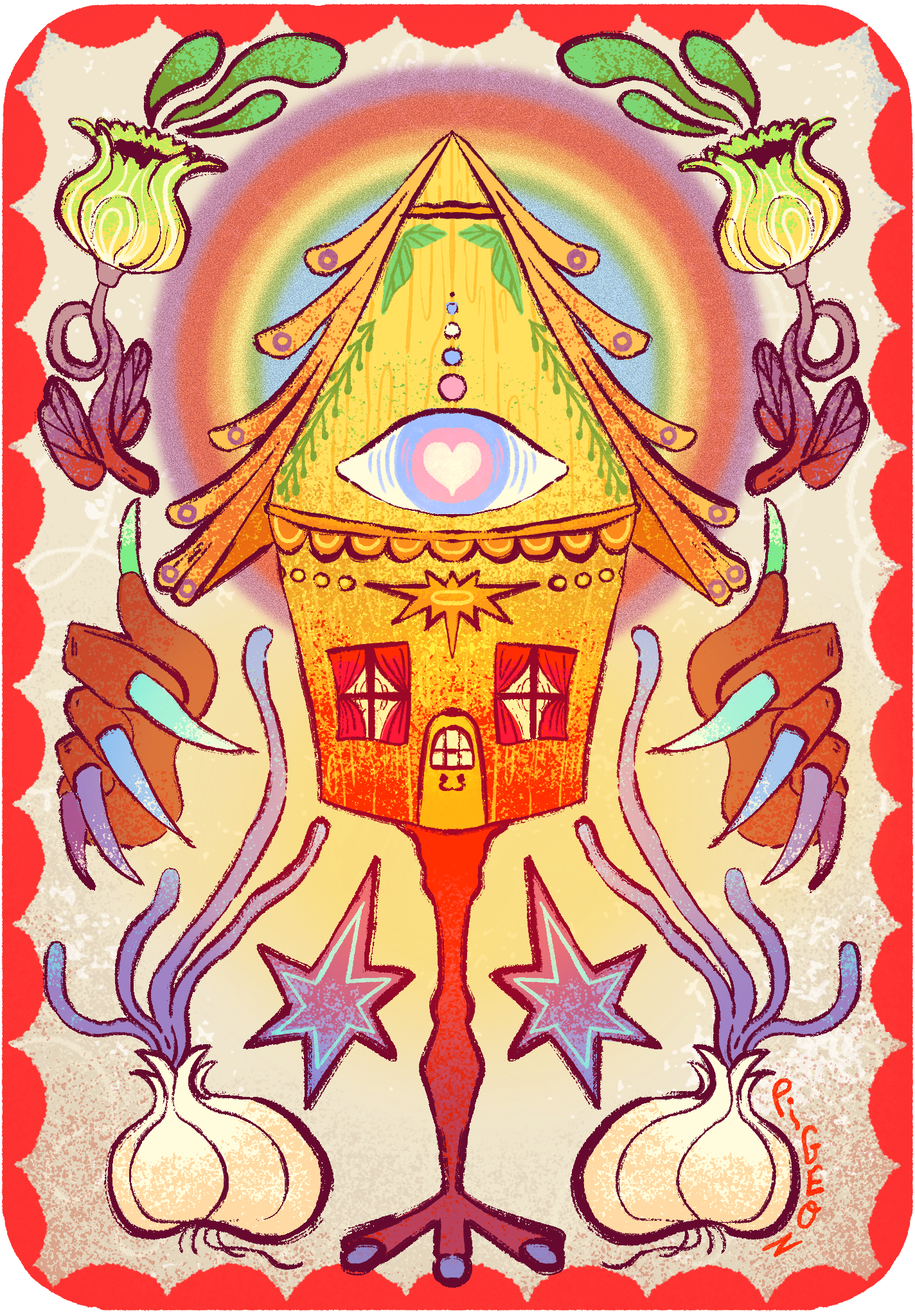
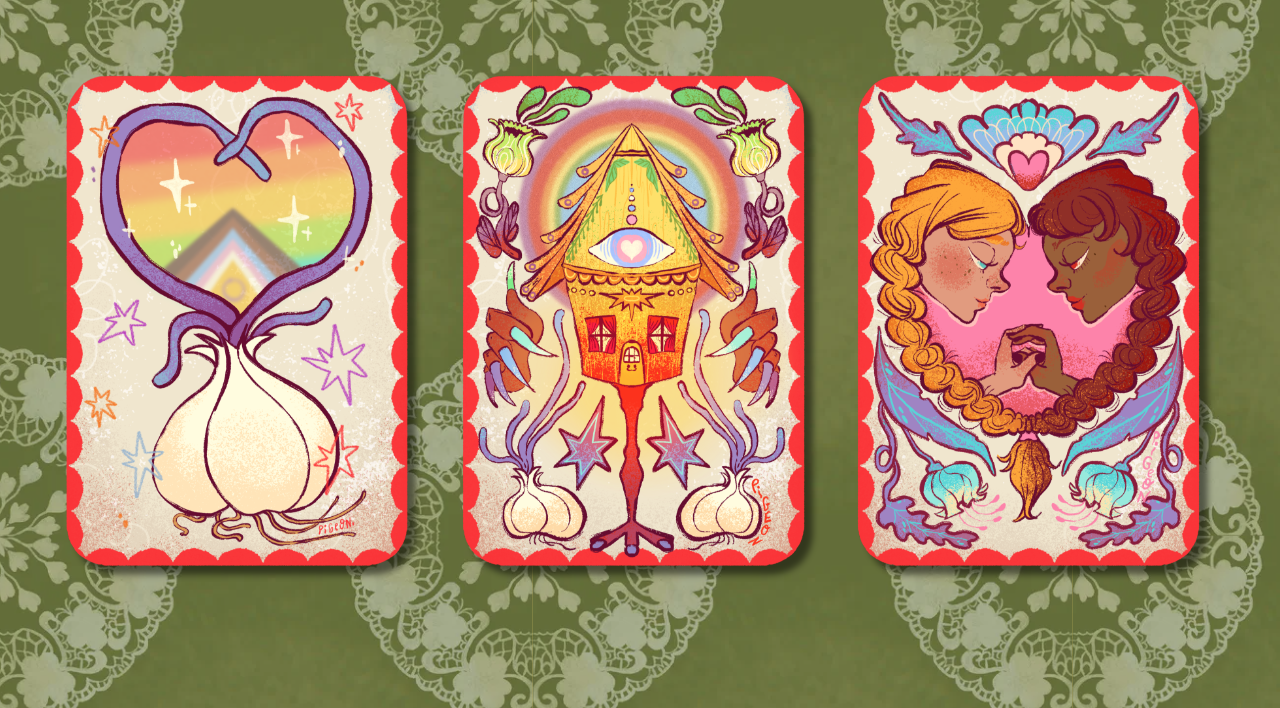
These were some of my favourite elements to work on! I designed 3 card backs, one default and two limited edition ones. I wanted them to be fun, colourful, rich in detail and capturing the vibe of the deck!
The default card back (on the left in the image below) is a garlic clove (garlic, my love) with sprouts growing out of it and forming a shape of the heart, which is then filled with a glowing Pride flag. Simple.
The limited edition backs are rich and packed with fun details. The Baba Yaga house design also features rainbow colours, some more garlic, florals and Baba Yaga’s hands with long rainbow claws. The third card back (on the right) is more gentle is sweet, based on one of my Slavic Sapphics illustrations, celebrating sapphic femmes and trans flag.
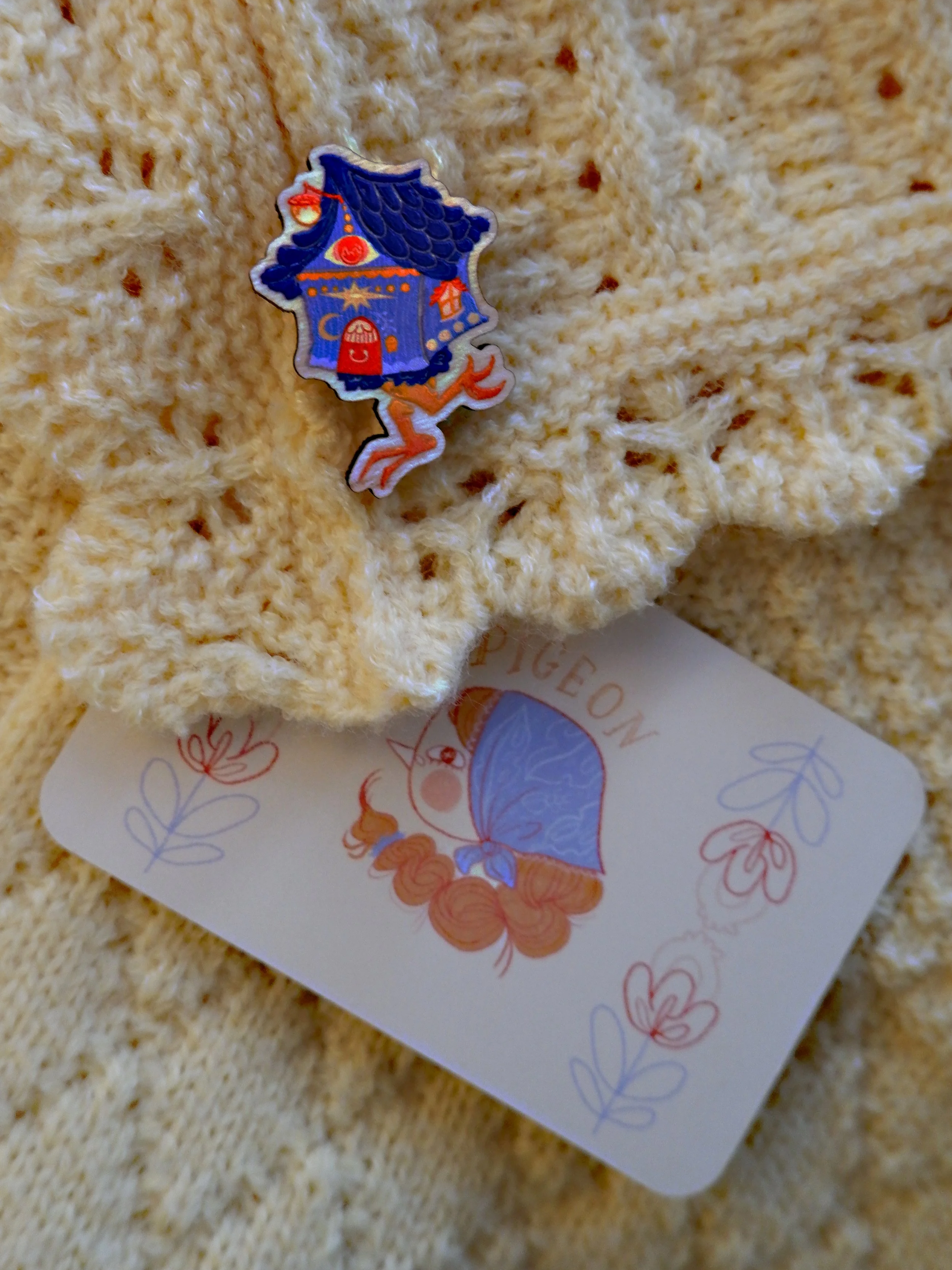

I started Slavtober as a personal challenge in 2020, a small project to re-connect with my own heritage .The pieces created during that time have developed and turned into my Slavic Mythology book.
Slavtober has since grown to a small community of creatives coming together each October on the socials to celebrate Slavic and Balkan culture, folklore and creativity.
This mini print series is based on four weekly prompts of Slavtober 2025, with drawings created in pencils and ink, and colours added digitally. Here you will find an essence of Polish and Eastern European folk elements that resonated with me: Forefathers Eve (Dziady), a collection of protective charms (like the motanka doll), mythical water demon Rusalka, and - lastly - a tribute to being a Slavic foodie!
——
PRODUCT DETAILS:
Includes 4 square prints (format: 150×150mm), printed on a high quality 350gsm card with silk finish.
The prints are packed as a set and sent out in a secure cardboard mailer.