

Folklore for Queer Folk! Making space for LGBTQ+ folks in the modern folk art:

“Much of the folklore, myth and legend we remember from childhood comes to us through the distorting lens of colonialism and Christianity. […] Even a casual glance into the world of folklore shows that it has always been dangerous; always subversive, always queer.”
- From the preface to Sacha Coward’s Queer as Folklore, 2024
This blog post touches on some very personal topics: cultural belonging, religious pressure, immigration experience and queerness.
But. I think it’s so important to share the reflections and journey that stands as a fundament of my creative work! The topic has been buzzing in my mind over the past couple of weeks. This text shares individual opinions of myself and other creatives, who feel strongly about this topic, which - it’s important to say - can exist and grow only if it’s talked about and picked up by a community. I am not an ethnographer, I’m an illustrator and storyteller with a passion for folklore research. I want this text to be a start of a conversation, not a final statement. So read on and feel free to send me your own thoughts afterwards!
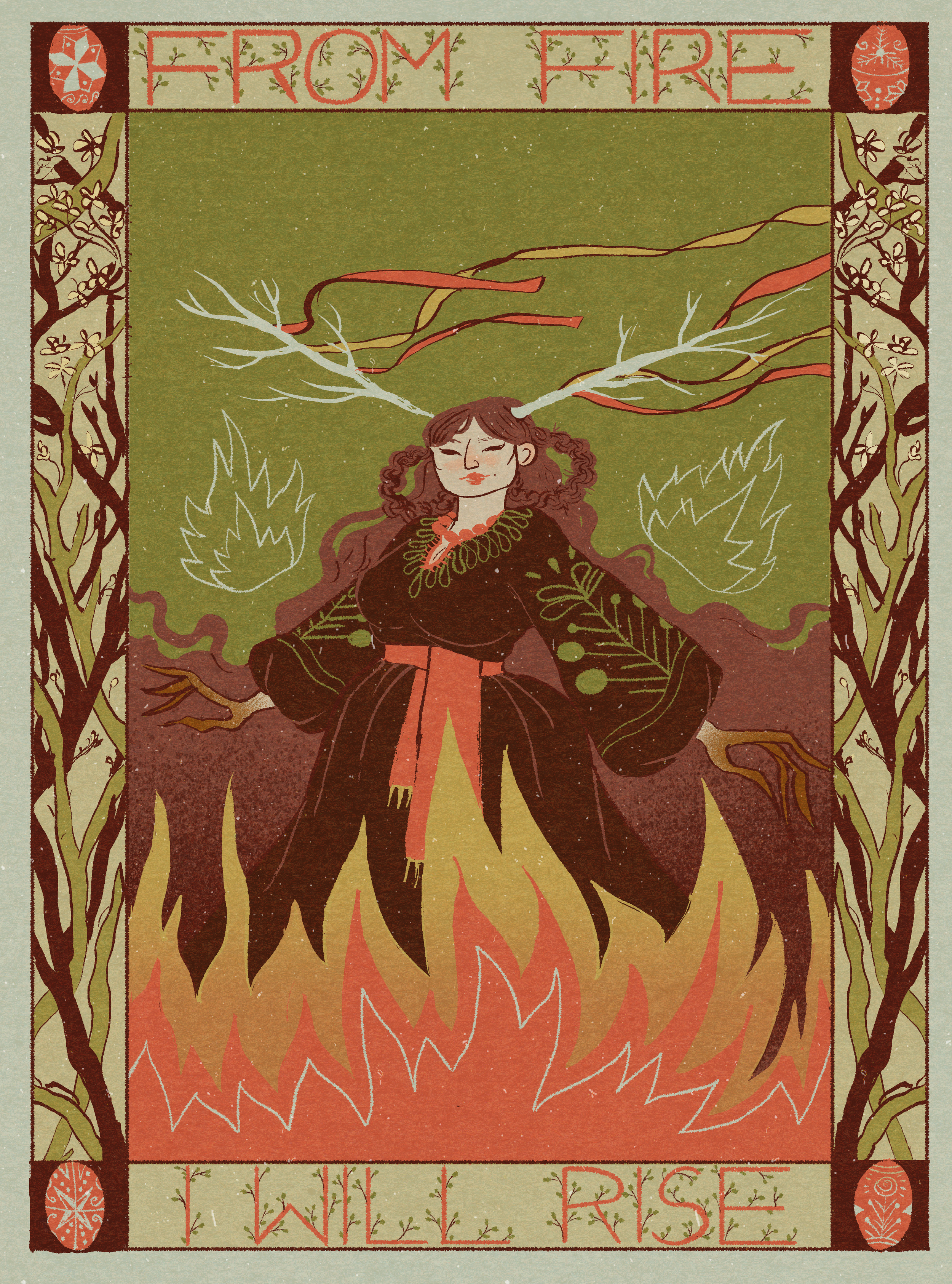
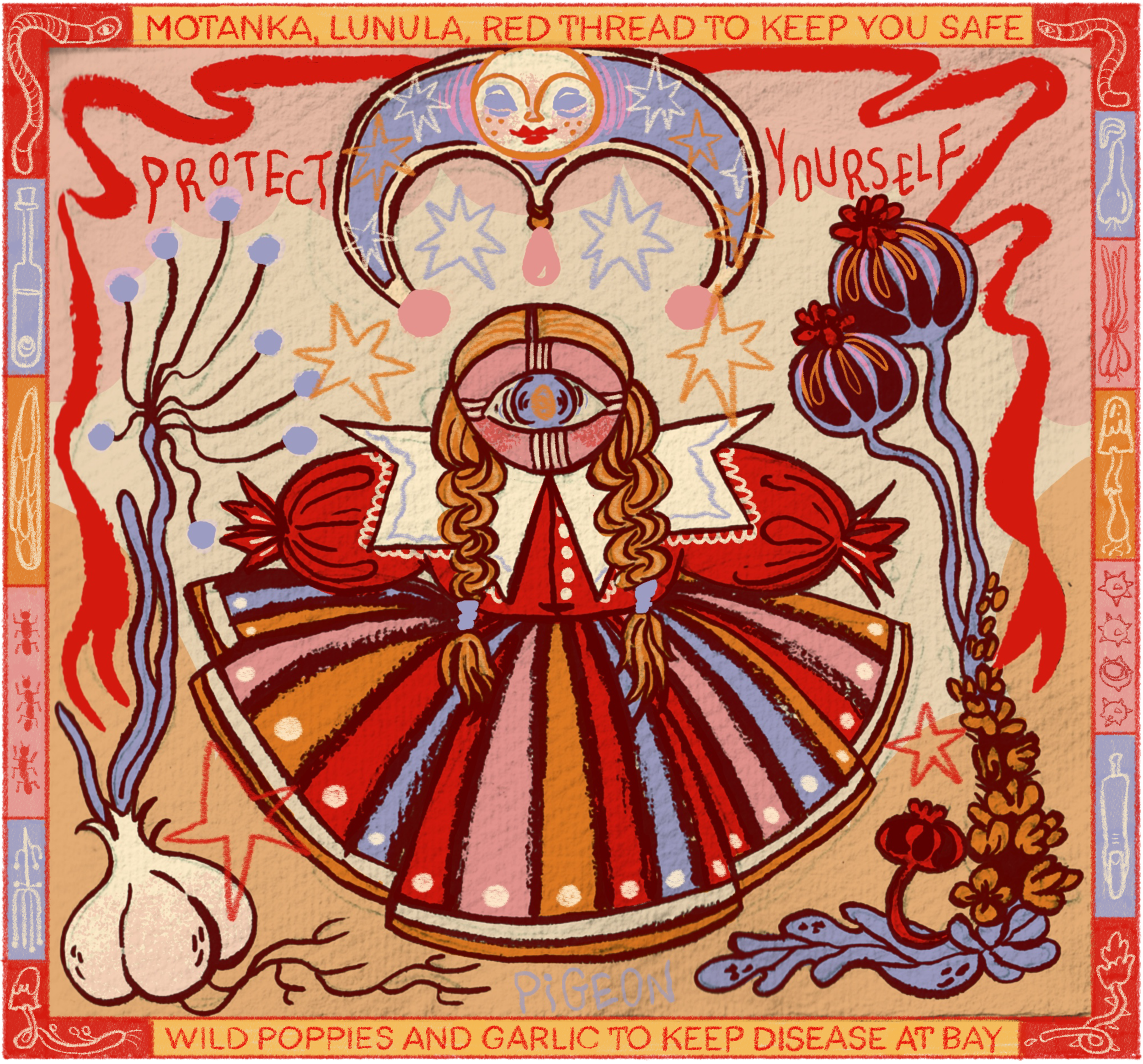
I would love to be the person who says: My grandmother used to tell me the tales of Baba Yaga. My family taught me to leave some milk in the saucer for the Domovik and tied red thread on my baby bed for protection.
However I must come clean: all I knew and was told growing up in Poland is that the Polish identity is equal to being Catholic. Patriotism was straight and conservative. The traditions and cultural customs were Christian.
But that’s not entirely true, is it? In fact, in retrospect I did grow up immersed in Polish culture, in our historical traumas and collective national mythology mixed with the traces of pre-Christian life weaved into my everyday. I painted pisanka eggs for Easter. I went with my classmates to drown Marzanna’s straw effigy in the river to welcome spring. I put hay under the tablecloth and left an empty plate setting on the table during Christmas Eve. As a child, at times I heard that if I’m not quiet, I’ll be taken away by Licho. (Let’s not unpack that, thank you.) Of course, I was usually told these are proper Polish, Christian traditions - painted eggs to symbolise Christ’s resurrection, hay under the tablecloth to remind us of the hay in the humble stable Jesus was born in and so on.
It was only later on I learned that these customs were originally of a very different meaning, alligned with nature and harmony with ancestors, and then appropriated by the church - they didn’t manage to kill the “pagan” traditions, so they made them their own.
As a result of my Catholic upbringing I have to admit that as an adolescent for years I kinda blocked off my cultural belonging, thinking of it as stuffy and outdated, and not fitting in with the person I was becoming. Once I realised that there is not much space (to say lightly) in the Polish Catholic community for social progress or feminist thought, and there is open hostility to anything that steps outside of the white, straight, religious and traditional lifestyle, my teenage mind drew a conclusion: if there’s no space in there for me, that means there’s not much for me in the Polish heritage at all. I guess I’m just not made for Poland.
It took emigrating to another country and a lot of searching to understand that this kind of reductive thinking is only a speck of what being Polish, Eastern European or Slavic can mean, and a very harmful way of seeing it. It took unlearning a lot of my old associations, and then actively studying and using my artwork to explore my relationship to my own heritage, to arrive at the place I am now: an artist besotted with Eastern European folklore, and seeing it very much as a part of myself.
Being a Polish immigrant in the UK presented a new set of challenges and pressures to fit in culturally, be the good immigrant and so on, but it also gave me a new personal freedom in discovering myself in an entirely new environment. Without going into too much personal details, the first tumultuous 6 years of my immigration experience were a bit of a journey. But it wasn’t until the bizarre lockdown time of 2020 when I decided to dedicate my remote Masters degree in illustration to two things: 1) finally publishing a debut comic rooted in Slavic folklore, and 2) writing my thesis on the folklore revival in Polish pop culture. This was an eye-opening time, both via my academic research and creative experiments. This is when I started my ongoing art series Slavic Sapphics (you can read it more about it in this blog post), and went into the rabbit hole of books, papers and media explaining the difficult relationship Polish people had with their folk heritage throughout history.
Folklore and mythology explains the complexities of our world, helps us make sense of it. So as I was understanding myself more as a queer artist who wants to re-connect with my heritage and make peace with it, I had to pose a question:
Where do LGBTQ+ folks fit in?
Throughout the centuries, despite its most passionate attempts, the Catholic church didn’t manage to fully smother the pre-christian beliefs in Poland (see: drowning the Marzanna’s straw effigy practiced as a harmless family-friendly playtime). In many areas they existed alongside the spreading Christianity in what we may call dual-belief, a fascinating topic on its own.
Similarly, queer people have always existed, albeit often in hiding, but undoubtedly participating in the local communities and traditions. It is heartbreaking to think how many queer histories are lost to us because of the threat of societal exclusion at best and violence at worst. How many creative queer minds crafted beautiful objects and costumes, danced along other folks, celebrated changing seasons, contributed to our current traditions without being able to fully live as themselves?
How do we lift these stories up and give them their well-deserved place in the collective understanding of our cultural heritage?
There’s so much to consider for artists working with folkloric themes in terms of responsibility. The topic of working with folklore in general is like a deep well with no end, and the more you look into it, the more intricacies and nuances lurk under the surface.
In October 2025, I have revived my annual Slavtober in an attempt to create an online event of creative celebration of Eastern European heritage and mythology.
One of my guest posts included asking fellow Slavic and Balkan artists about the importance of including LGBTQ+ narratives in their art work. The artists insight and the responses from people to this posts went beyond my expectations, clearly showing passion and need for making space for queer stories in this area.
The watercolour artist Stasha (heruvimski on instagram and one of my Slavtober guests) said: “I think it’s important to include queer narratives in folklore, in the sense of bringing the new life and vitality into the old stories: bringing new perspectives that could have existed before within the correct circumstances.”
This idea - the stories that could have existed, and most lilely have, but weren’t recorded - is what stuck with me and drives me to explore it deeper.

“For me, including queer narratives in modern depictions of folklore is vital because it reclaims the cultural space for identities that have long been excluded or erased. Folklore and heritage shapes collective memory and national identity, and by weaving queer stories into these traditions with a string of magical realism, we challenge the notion that heritage belongs only to the dominant heteronormative narrative. It allows marginalised communities to see themselves reflected in the myths and symbols that define their culture. It fosters belonging and visibility while breathing the new life into the old tales.”
- @queer.x.folklore on instagram
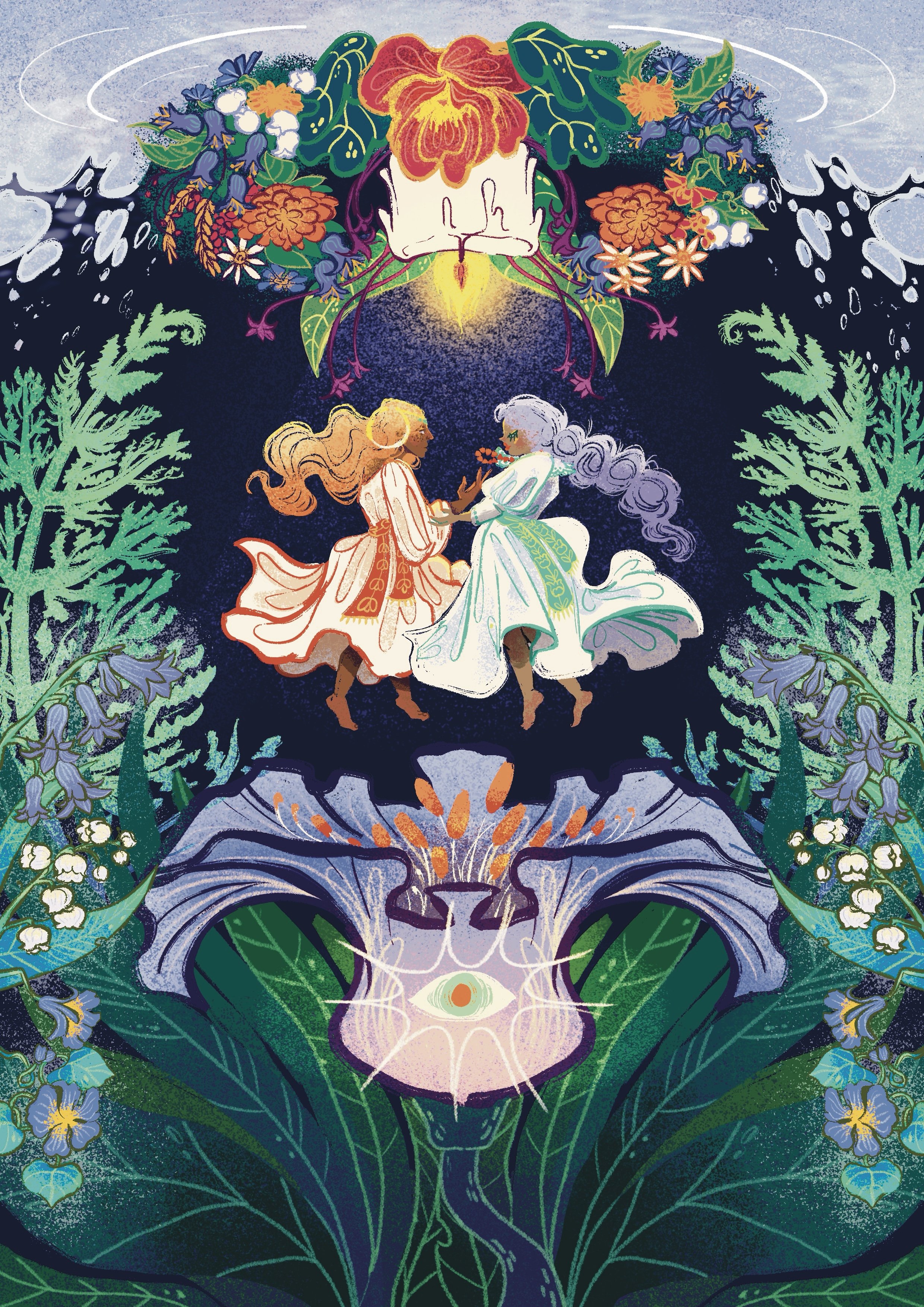
I attended the first online Folkmoot organised by the newly formed Folk Union and one of the questions has really hit me, like it wasn’t obvious:
What GOOD comes from re-imagining and reviving folklore beyond just aesthetic presentation?
How to curate folklore without a fetishistic approach, without getting stuck in a trap of aesthetics only? Who is the custodian, and who is the audience? Can over-intellectualising folk culture bring in its own challenges?
Folk culture has always been, and should remain, a participatory and collective experience, created by people for the people.
There’s a delicate balance between respecting the existent, concrete historical heritage and not falling into putting it behind a museum’s glass cabinet to gather dust.
This topic of curation of folklore goes deep, deep into the well of discussion I mentioned earlier, so let’s focus (for now) on the queerness of it all, and let’s circle back to the forgotten queer histories.
One could argue that what I and other similar artists are doing while re-imagining or depicting mythology or folk heritage through the filter of our own imagination is an act of folklorism (fellow nerds, this one is for you): the intentional use and adaptation of existent heritage for artistic or re-enactment purpose. It makes perfect sense, but this division is tricky; it separates an idea of pure, finalised, historical folk heritage from its modern re-imaginings.
It becomes more complicated when you try to pinpoint when does the historical, “real” folklore end and folklorism begins. Many people would have vastly different ideas about this timeline. And now, how does that operate in the context of historical queerness? In many cultures it is difficult to find inclusion of queer narratives in their established traditions and folk customs. However, at some point more and more queer readings and interpretations of folk elements started appearing, portrayed by people like myself, who want to re-connect with their own heritage and expand its definition into more inclusive and more representative. In our queer readings of folklore we focus on a group of people whose histories perhaps weren’t documented, whose experiences might have been overlooked or not included in the historical customs, but nevertheless they have space in this heritage.
Personally, I am as interested about the past as I am about the idea of folklore as a living and fluctuating thing.
Folklore and mythology has always existed to explain the complexities of the world around us, to teach and spark wonder. The rich folklore storytelling can provide metaphors that help us relate to the queer experience, and character types that help us explore the strange and unusual within us.
Can’t these creators’ work be seen as participating in their culture and contributing the one of the most wonderful functions of folklore: its fluidity? Doesn’t this kind of work have potential to expand the definitions of who belongs into a certain culture, and who can fully identify with it?
“There’s this conviction that folklore is something that belongs to the conservative part of our society. Meanwhile many queer people love folklore and feel that their identity is strongly rooted in cultural traditions. I illustrate queer characters in folklore vibes to reclaim this and show that folklore is for everyone.”
- Adriana | @chabry.ttt on instagram

Eastern Europe has always had a problem of being viewed by the West through a very Russian-centric (read: imperialist) lens. Perhaps working with the incredibly rich region-specific folklore could be a tool of decolonising that perspective, and preserving the diverse experiences of people from places like Ukraine, whose cultural heritage is under attack.
Additionally, the nationalist and conservative narratives and right wing groups gatekeeping the heritage contribute to erasing rich histories and experiences of LGBTQ+ people, and keep us from participating in our own folk culture. There is a sense of entitlement to the cultural heritage in the Polish far right, who is with full sense of authority tying the cultural belonging to its conservative, queerphobic agenda.
As we see the rise of the far right all around, LGBTQ+ media being banned and history erased before our eyes, it’s especially important to keep our heritage alive and share it through our art, stories and community.
We need our folk culture to be diverse, representative, and alive.
Thank you for reading this post!
If you enjoy the work I do, consider supporting me through my Pigeon Shoppe.
This post is certainly only a tip of the iceberg and a tiny step in my own on-going research. If you enjoy these kind of musings, how about staying in touch via my Postal Pigeon newsletter?
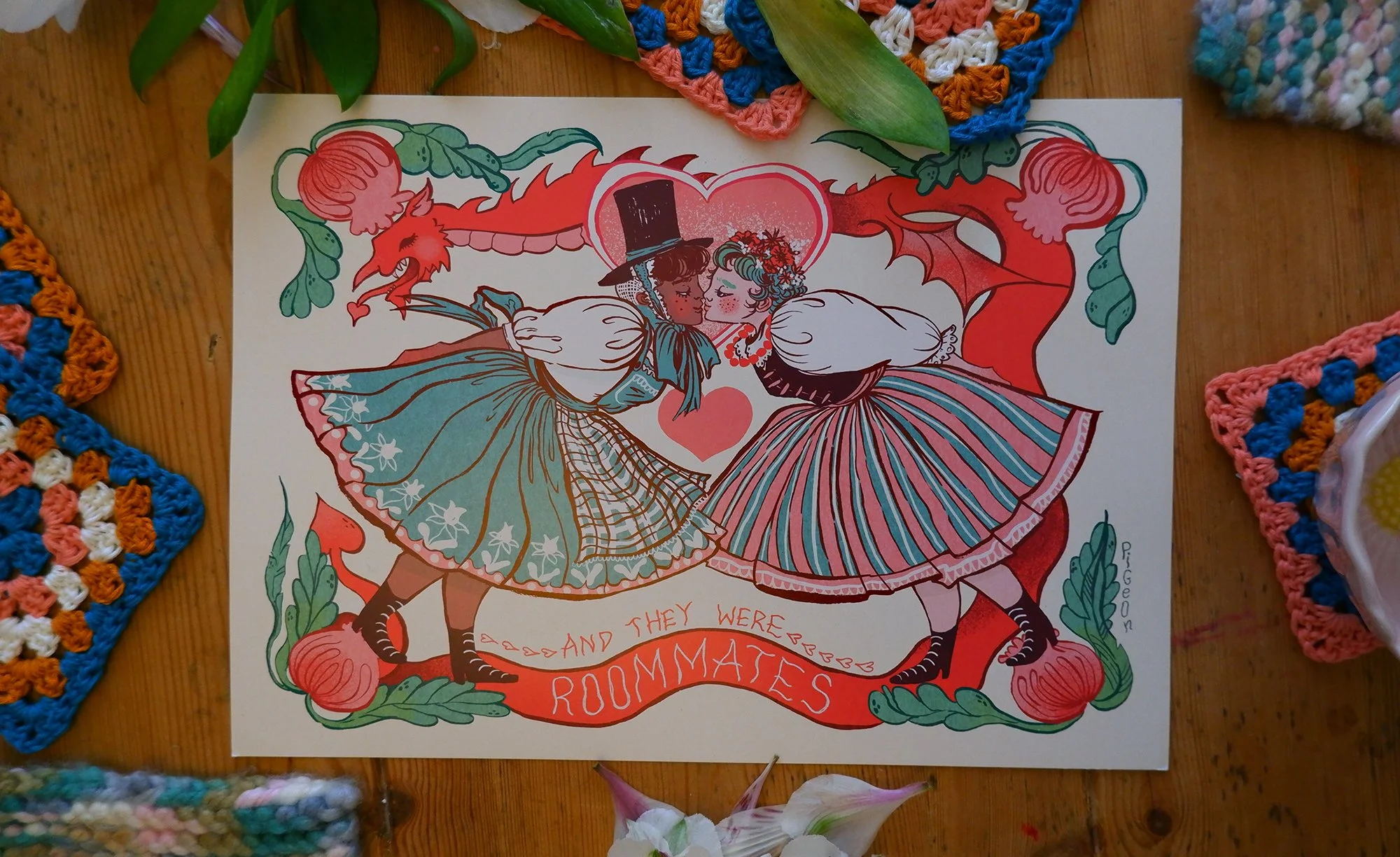


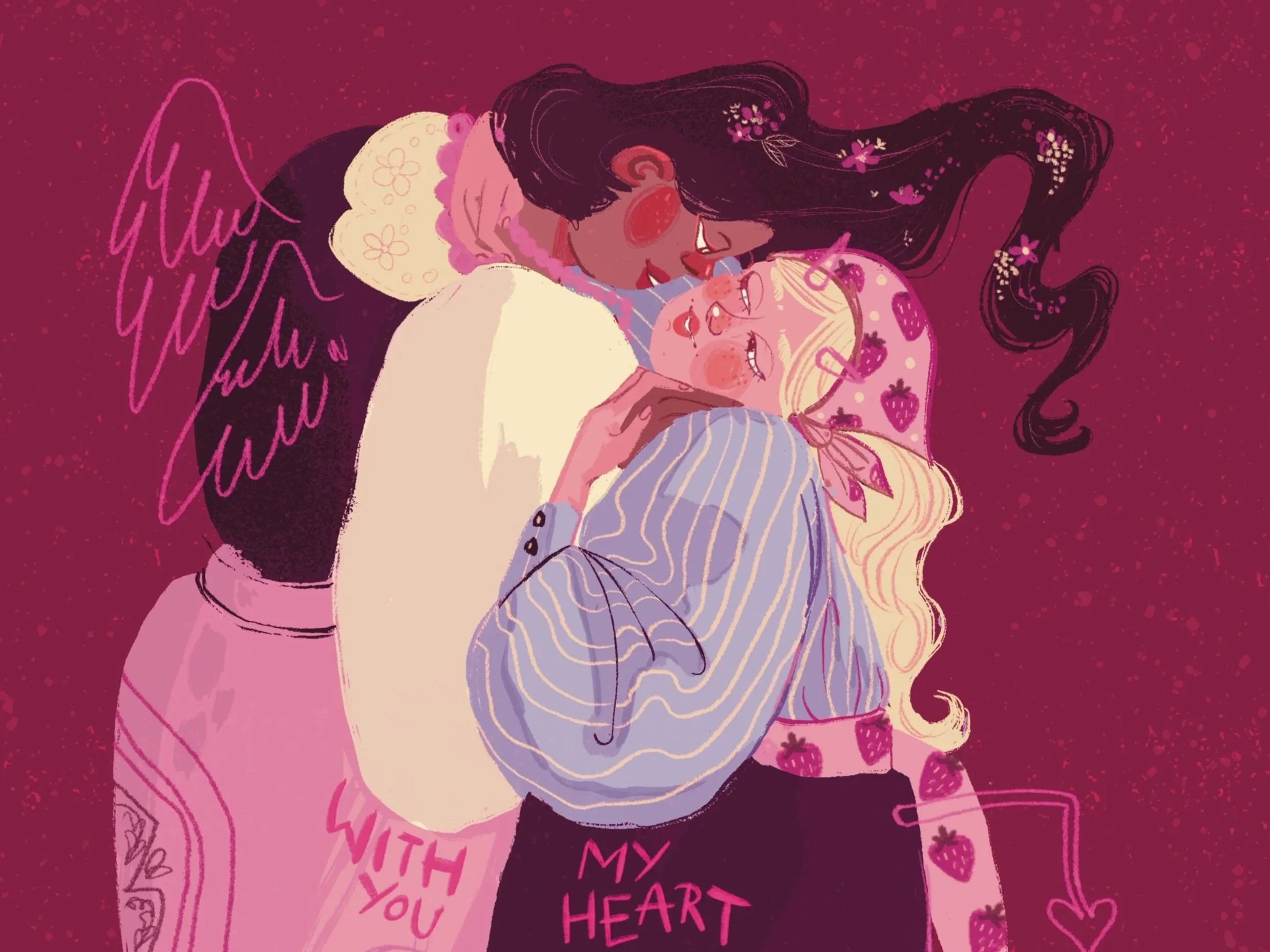
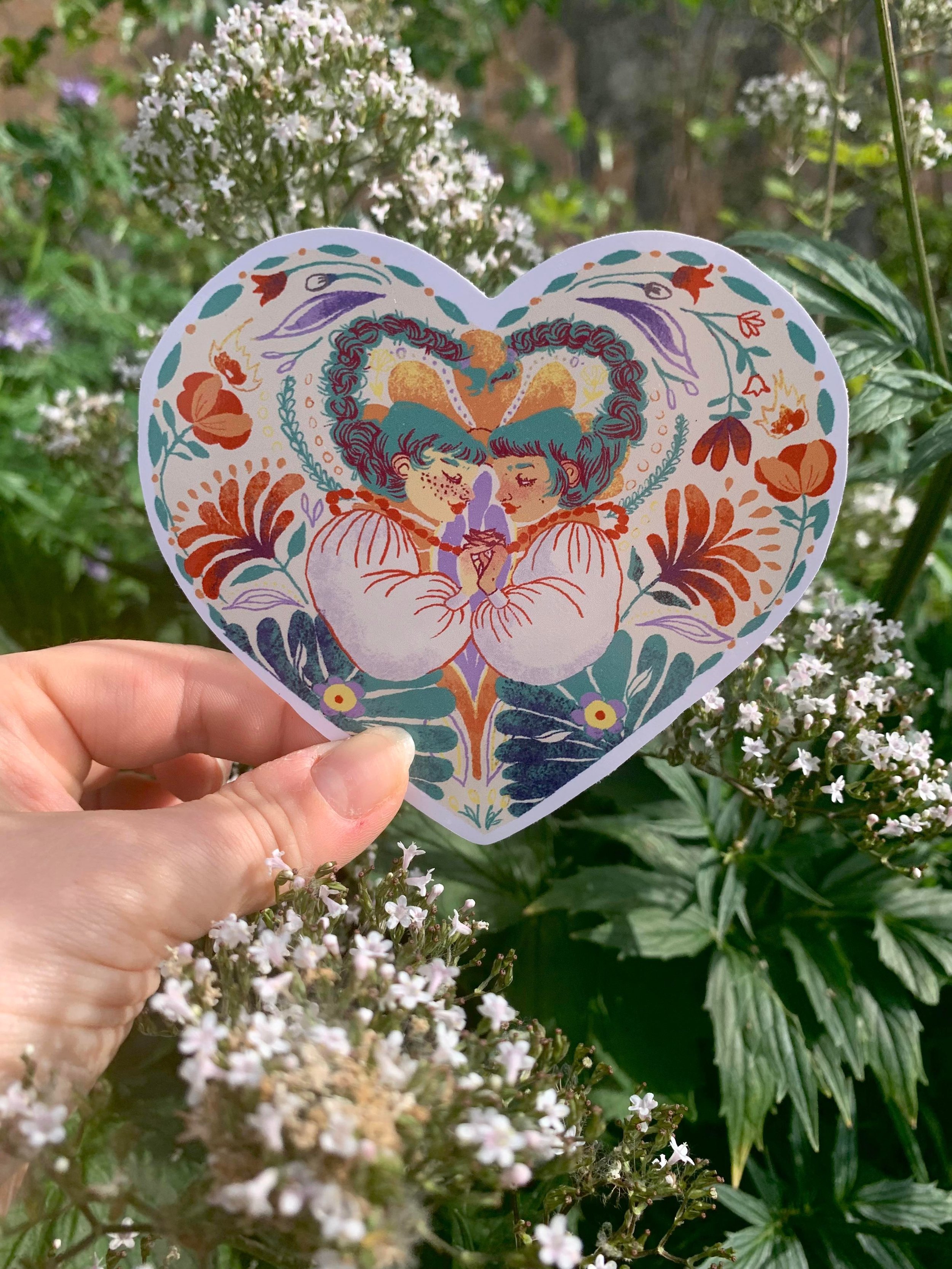
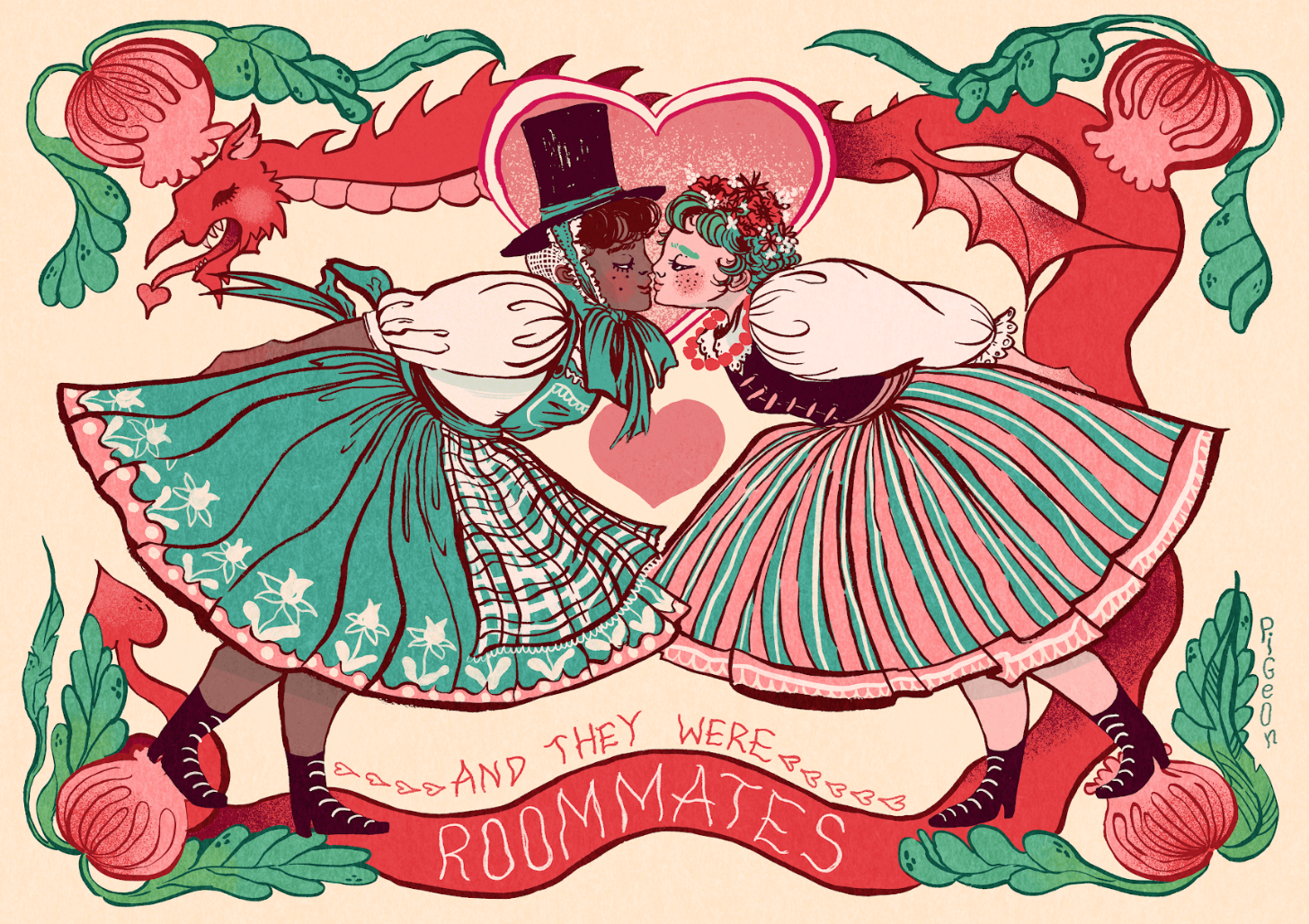
Blood of the covenant is thicker than water of the womb.
Found families and community have always resided in the special place among the queer history, as well as the lives of immigrants and other marginalized folks.
Love and care within friendships is so important. We all have a deep need for a community (even a tiny one) with whom you can casually spend time being fully yourself, and knowing you’ll be supported, lifted up and cherished. Some people are fortunate to have that in their biological family, and that’s wonderful. Very often though we need to venture out to find our people.
—
PRODUCT DETAILS:
This illustration is printed on a high quality heavyweight stock (350gsm) with vivid colours and a smooth, satin finish. Please note that the colours might vary very slightly depending on light and computer screen.
Each print comes in a protective sleeve and is sent to you in a secure carboard mailer.
Available as size A4.