

Slavic Sapphics! Deep dive into the art series illustrating folklore and heritage with a touch of queer pride:
We have just passed the St Dwynwen’s Day (the Welsh holiday of the lovers), the more commercial Valentines are quickly approaching…I think it’s perfect timing for sharing this post on my Slavic Sapphic series, especially as I realised this is the sixth year (gasp!) since I created the first image in the series. Little did I know this illustration will send my art work on a completely new trajectory…But let’s start from the beginning.


The original Slavic Sapphics
I remember very distinctly that the time when I made this folky illustration was very tough on my mental health. Amidst the 2020 pandemic I felt very, very lost. After the restaurant I was waitressing in closed for the lockdown, I saw a little opening and threw myself into the remote studying for my Masters degree in Illustration (is your coping mechanism throwing yourself into work too?). My budding search for who I actually want to be as an artist (small question, no pressure) resulted in a long, deep rabbit hole of research into the history of Polish folklore, the rich world of Slavic mythology and the lack of LGBTQ+ stories represented through folk craft. The image you see above started as an ink brush pen drawing on watercolour paper: I knew that I wanted to incorporate more of the beautiful folk patterns into my work, and felt inspired by the Polish papercuts and their symmetrical, geometric designs. Another inspiration here were the colourful patterns of the Lowicz region, probably one of the most recognisable and well-known of the Polish folk ornaments:
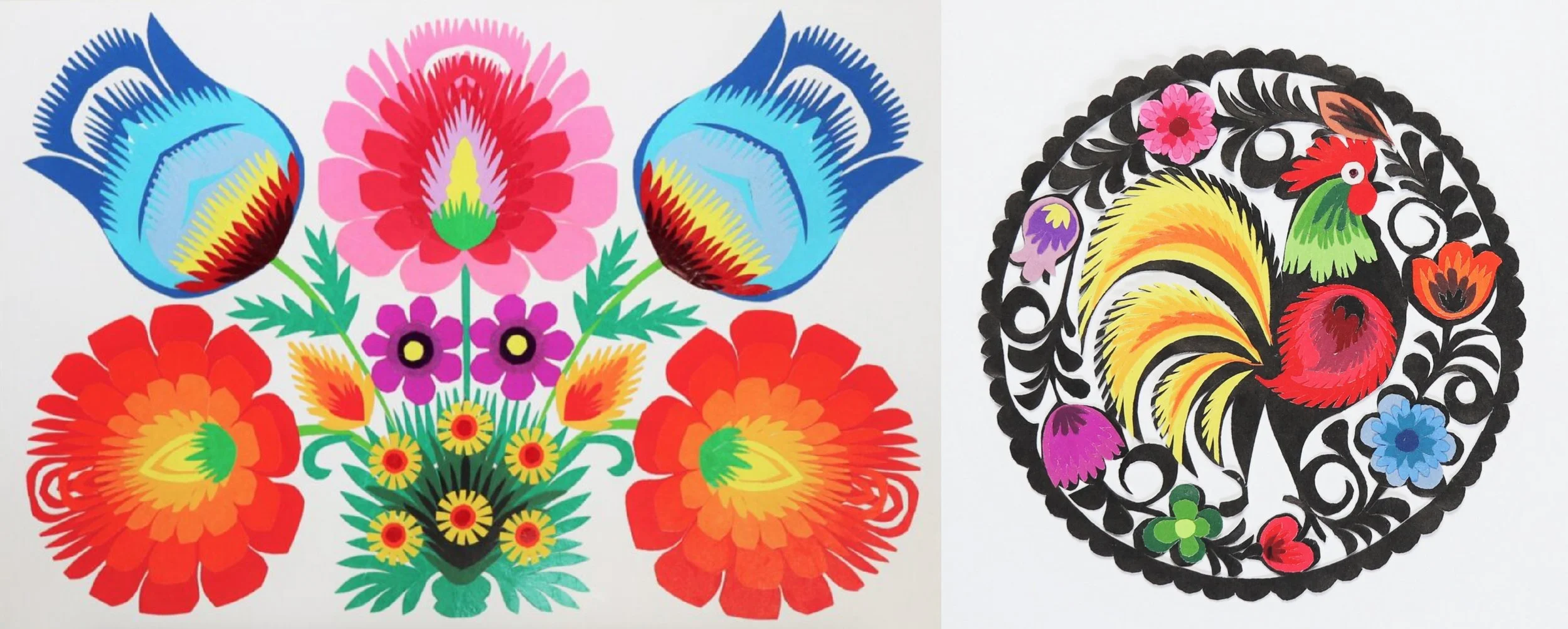
Examples of the Lowicz papercuts - the authors names are unfortunately unknown. Source: galeriafolk.pl
At this time I was chronically online, observing the news with horror, and wanting to connect more to the Polish community, especially after the Women’s Strike Protests broke out all around the country and we all connected in rage against the right-wing government policing our bodies and societal roles. I did make some art specifically connected to the Protests (it was featured in now archived Calvert Journal and at the European Green’s Copenhagen exhibition), but I’m sharing this context because these political events and researching more gave me a stronger understanding of how these concepts of being Slavic / Polish, concepts of heritage and cultural belonging, were claimed and gatekept by the conservative groups, excluding the LGBTQ+ folks.
A small movement started in Poland at a time of artists creating images that connected things like traditional folk dress or regional folk traditions with inclusive messages and protest slogans in order to reclaim the culture. This has resonated with me very strongly, especially as I was in a place where my personal queer journey and re-discovering my Slavic identity have merged. Thank you to the below artists to inspiring me:
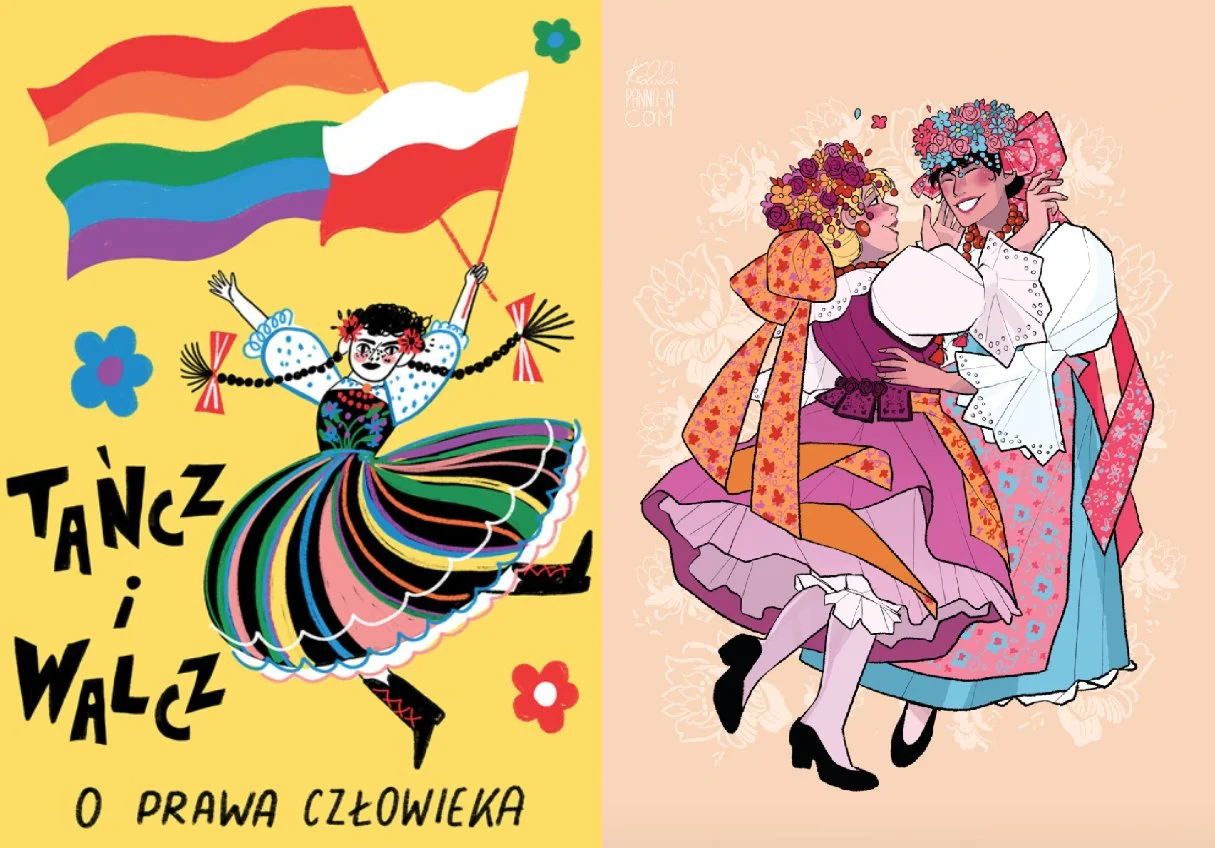
Left: A poster by Ola Szmida [text: Dance and Fight for Human Rights] // Right: An illustration by Katarzyna Witerscheim
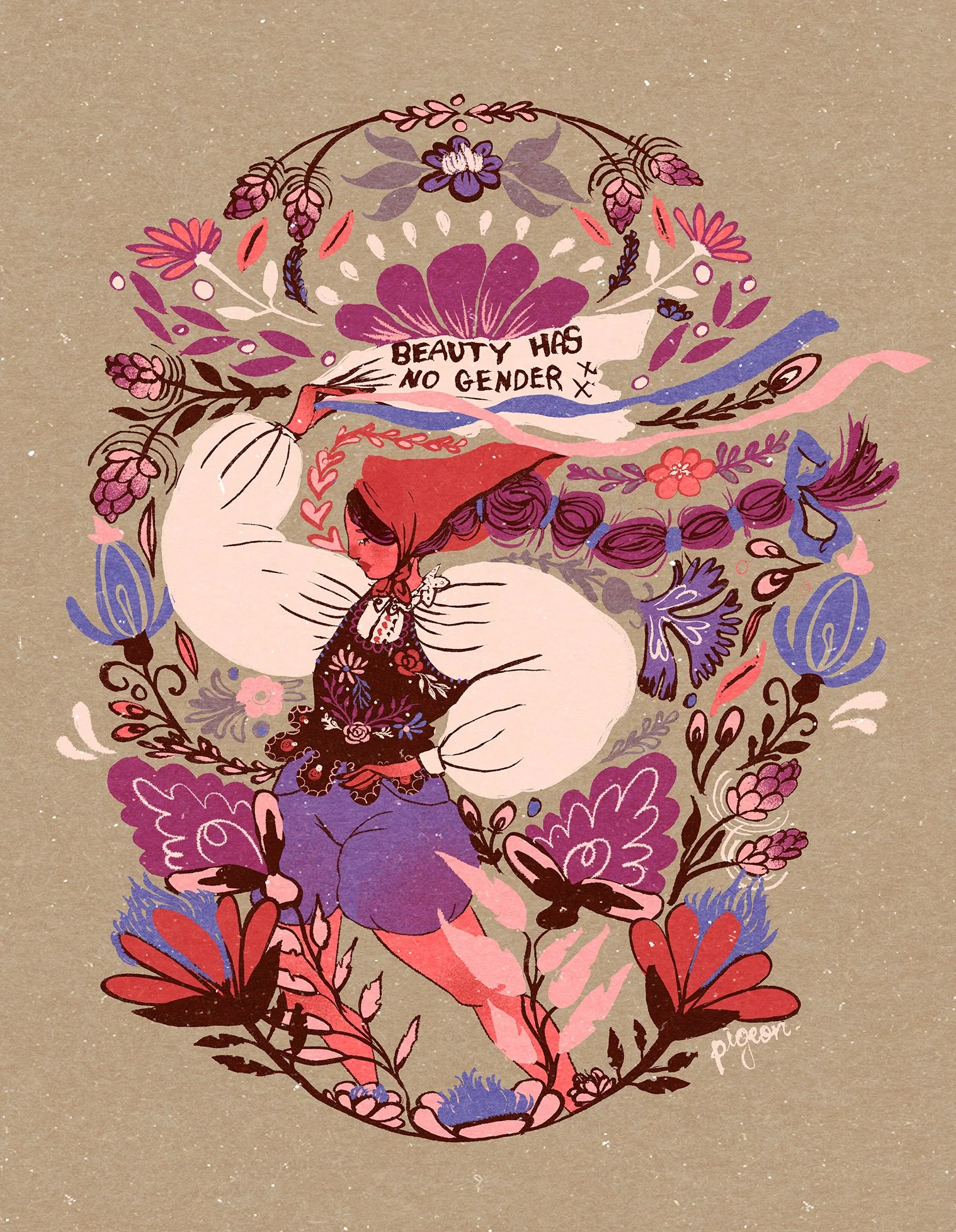
2. Beauty has no gender
The second illustration followed in the same year, and I was getting more confident in using the folk patterns and incorporating the gorgeous traditional clothing, here with a modern twist. This image was just a practice ink drawing but it has really resonated with people (the support for it honestly outgrew my expectations!) so it became one of my staple art prints. Worth adding that at a time when I was drawing this I was also looking at the beautiful Ukrainian craft of petrykivka painting, and wanted to pay a little homage to it in this design.
I realised that what I wanted for my folk-inspired illustrations is to spark some fun in your eyes and mind (hence the colours and patterns above!) while sending a message that feels empowering and speaks to the collective queer feelings.

3. From Fire I Will Rise
Hear me out here. I know that at a first glance this image doesn’t seem sapphic in nature, but it sits firmly in this series for a reason. The entity you see above is my interpretation of Marzanna, one of my favourite Slavic pre-Christian deities.
Marzanna (also known as Morana or Morena) is a curious creature in Slavic folklore. She was once a powerful goddess of nature and winter time, associated with concepts of death and rebirth. Her death at the end of winter is necessary to make space for the spring and the deities who are patrons of this time. The echo of the pagan seasonal celebrations is “drowning of Marzanna” during Spring Equinox, which is generally a family-friendly fun activity consisting of making garish puppets of Marzanna, parading with them and throwing them into a river. Sometimes the dolls are also set on fire, and there are many folk songs for the occasion. In the past Catholic Church has attempted to stop this custom, but luckily the tradition lives on.
I read more about Marzanna’s history when I was writing my Slavic Mythology book and became fascinated with the idea of femme-coded pagan deities whose meaning and authority became diminished or demonised throughout history. These days in Poland Marzanna is just a fun folk puppet, but I wanted to depict her as a powerful being she might have once been. She’s surrounded by the symbols of new life like fresh spring flower buds and the painted eggs called pisanka.
The slogan itself speaks to queer resillience, transformation and re-invention against the odds.
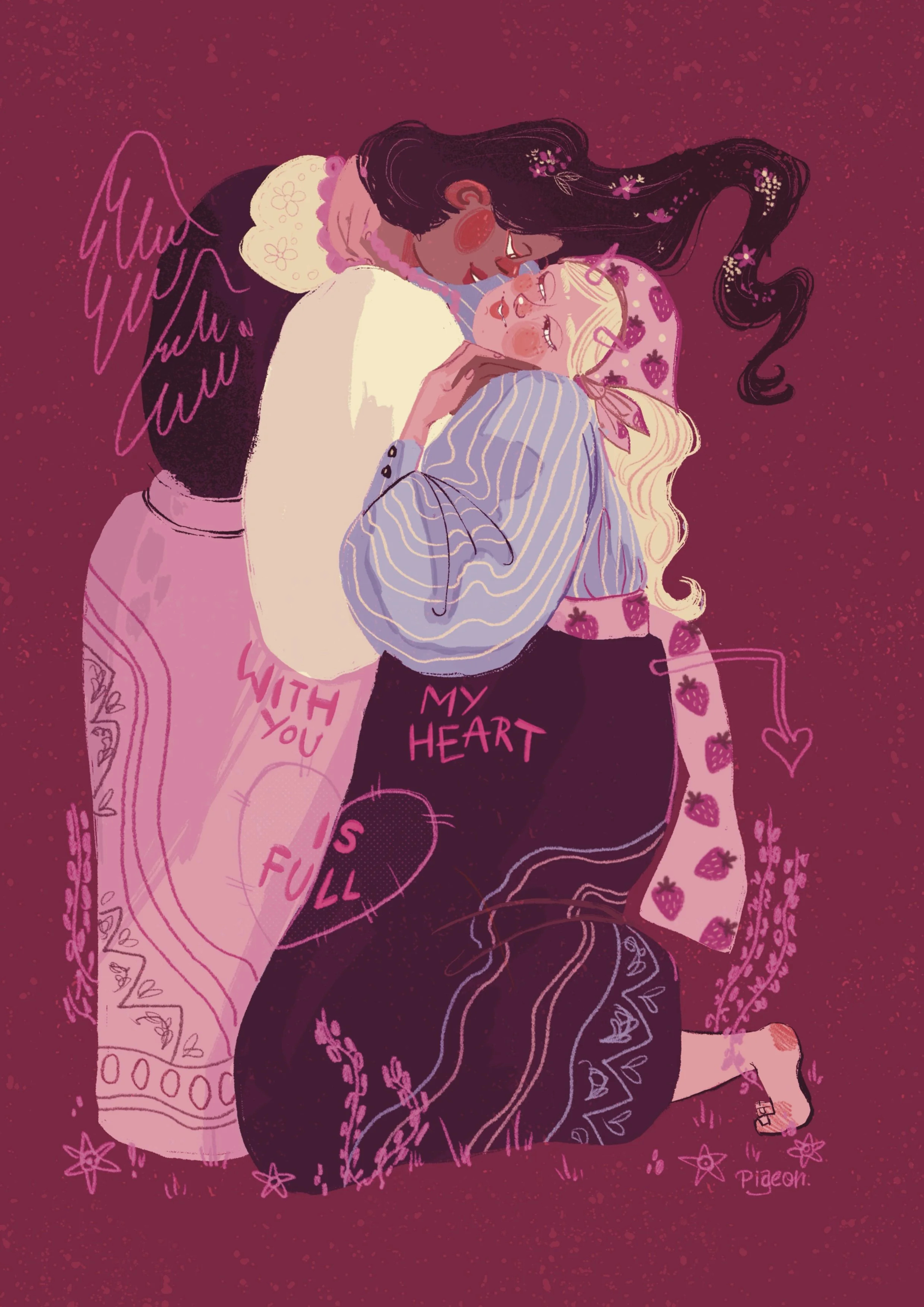
4. The Kiss
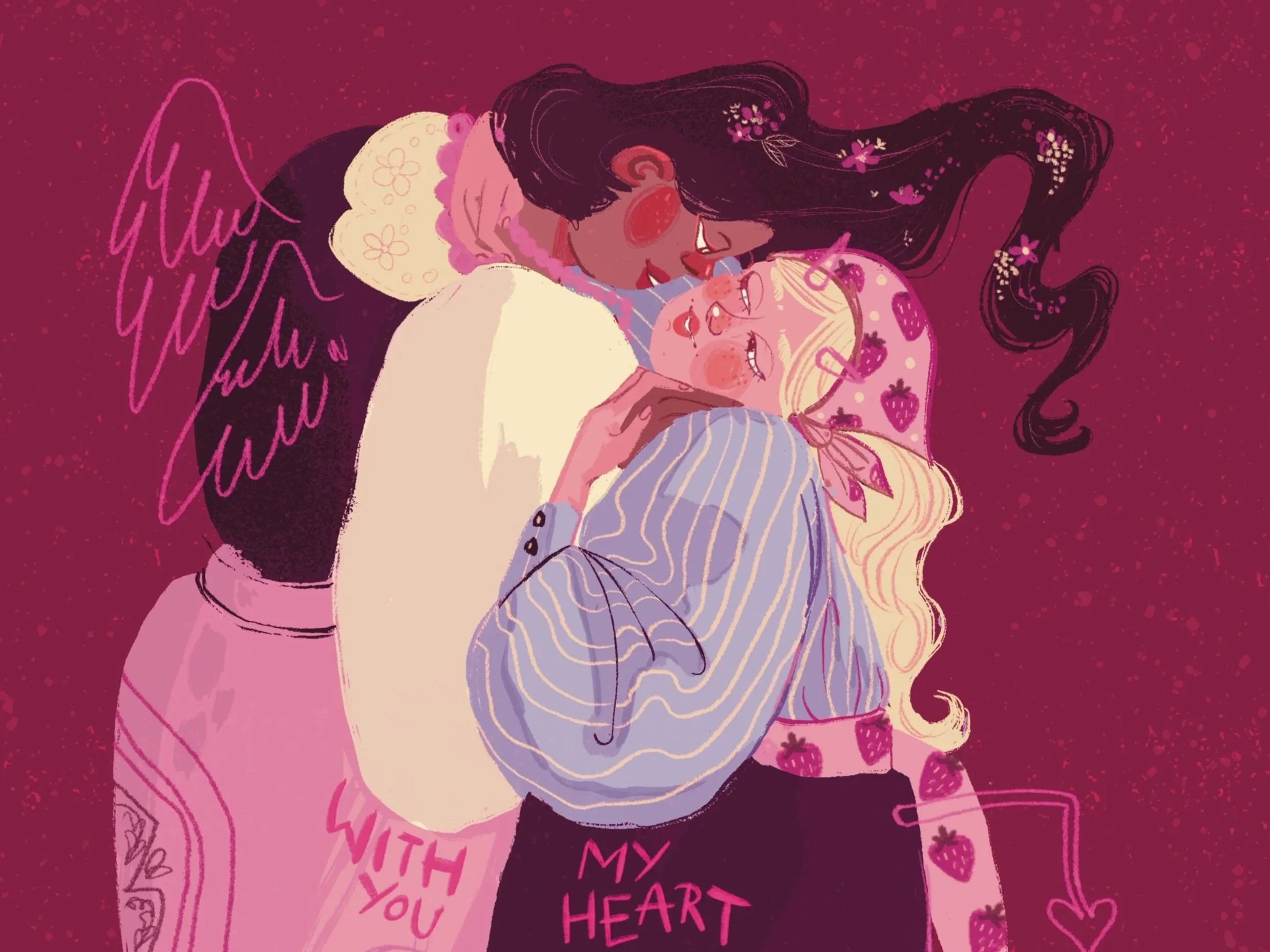
Something tender and a bit cheeky was the idea to take on the famous Gustav Klimt’s painting and make this pop postmodern version featuring two sapphic gals wearing funky, modernised version of the traditional Polish clothing (I actually need that strawberry headscarf to exist, please). This one was created fully in Procreate (the previous pieces are a combination of ink drawing + digital colours in Photoshop) and I focused on simple, geometric shapes for the characters.


5. Kupala Night
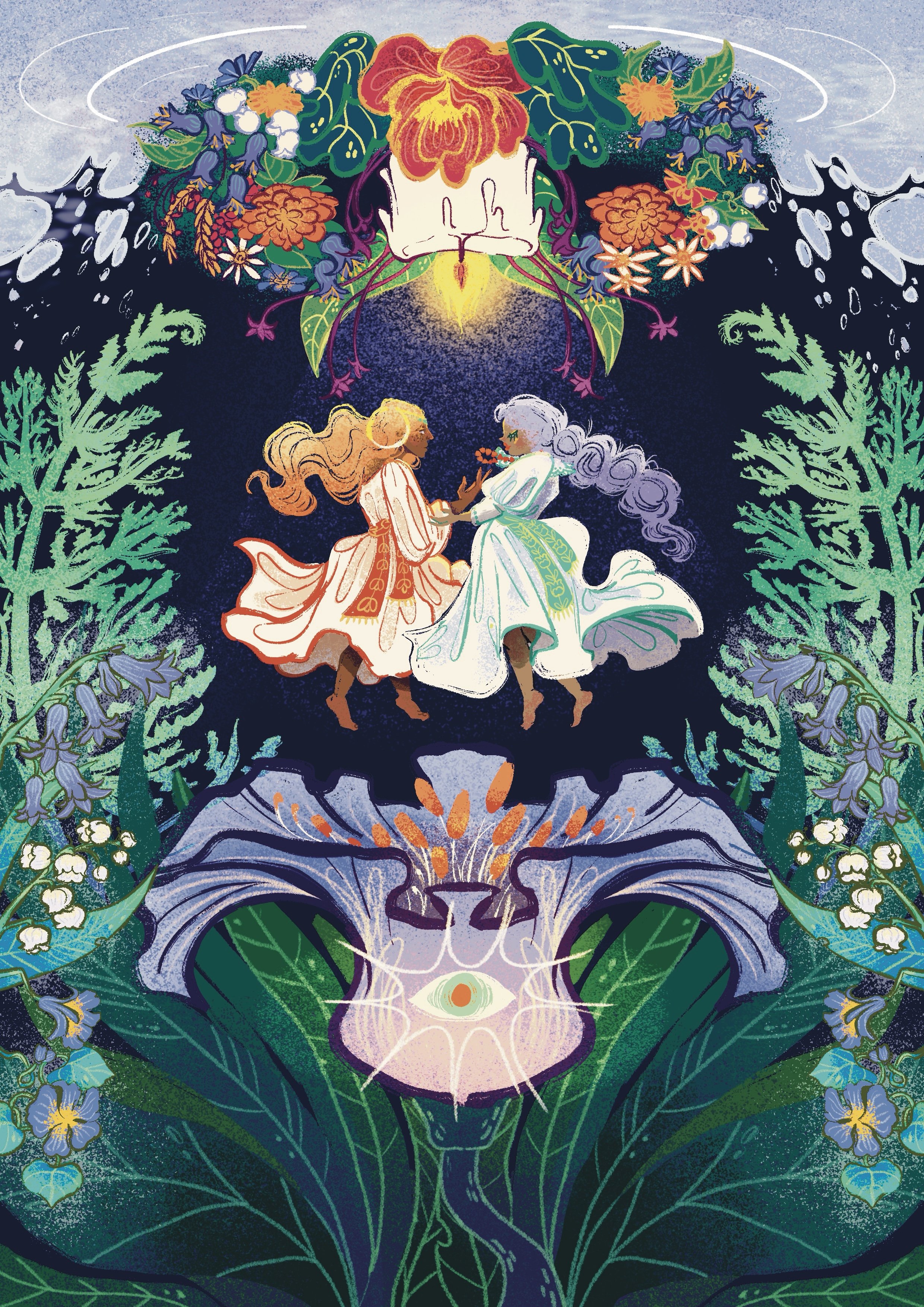
At last, the Midsummer! The Slavic summer solstice is a very special time for me: because it’s my birthday, because it marks the very height of summer, and because the mythology and ritual around that unique night have always sparked my imagination.
If you know my book Rusalka: Whispers of the Forest, you’ll remember that Kupala Night is the turning point for Rusalka, and the mythical Fern Flower plays a crucial role in the entire story.
The shortest night of the year was charged with spiritual and sensual meaning. It’s a night of freedom and hopeful lovers. Large bonfires were lit and boys competed to jump over the flames for good luck. The flames were seen as a gateway to the other world, the afterlife and dimension of spirits, and were always lit during the equinox. Water also played an important role: the young women would make beautiful floral wreaths and send them onto the lakes and rivers in hope for one’s lover to find the right wreath and pick it up.
People also ventured into the woods in the search of the mythical Fern Flower. It was believed to blossom only during this one magical night of the year, and the lucky person who found it would be granted riches. You can see all of these elements incorporated into the design above.
One can’t help to wonder whether Kupala created a unique chance for the queer folks to meet with their lovers freely...
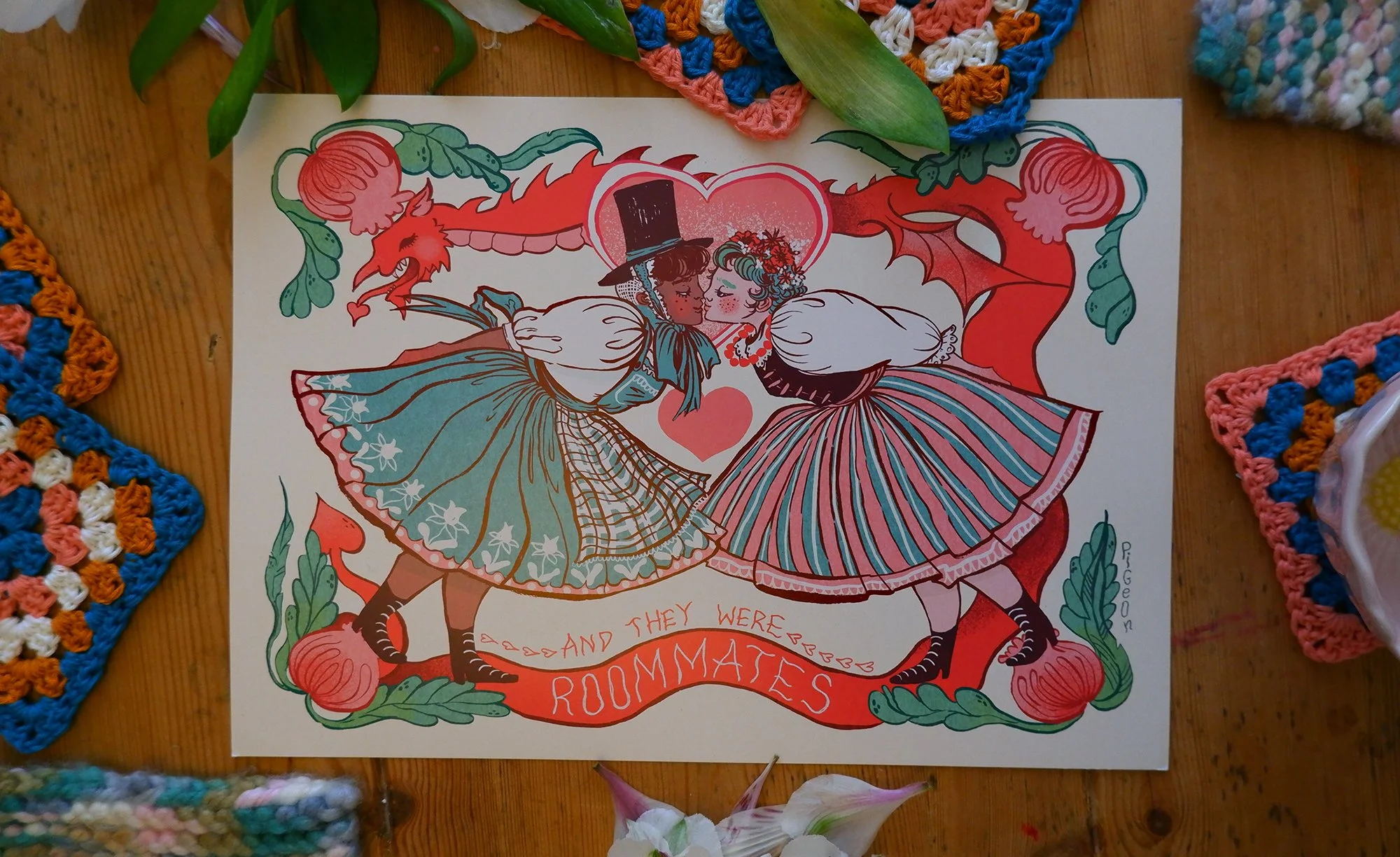
6. Friendly Relations
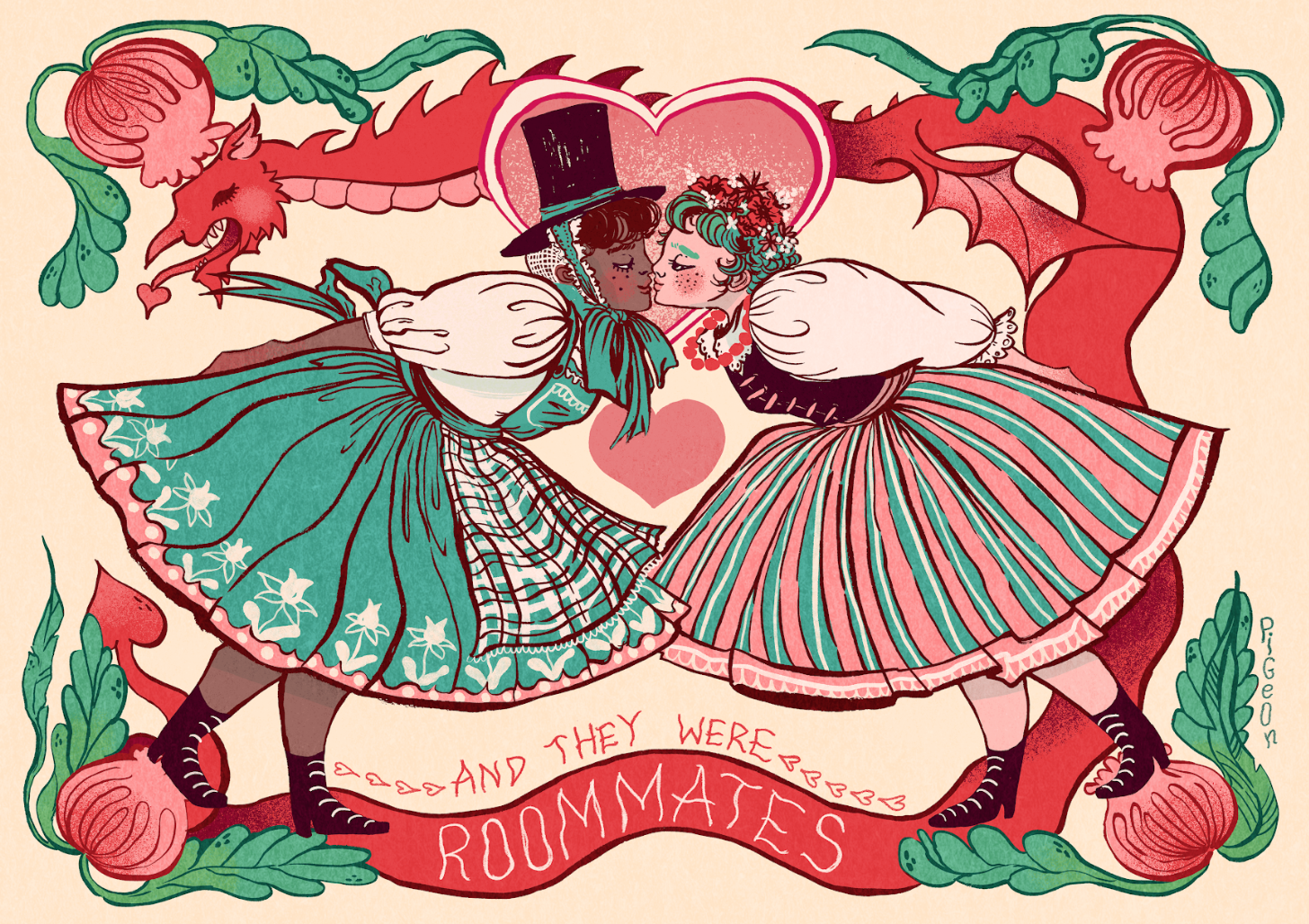
Reflecting on the fact that it’s been nearly 12 years (!) since I left Poland to live in Wales, I thought it would be fun to show this cultural crossover through a cheeky and playful addition to this series. Wales, it’s an honour to call you home and learn about the Welsh cultural resilience as well as local quirks!
I’m still learning about the LGBTQ+ history and the pattern of erasing queer relationships through historical labelling as “just friends” or “roommates” (you know, you’ve seen the memes). I honestly believed we’re way past it but over the past couple of years I heard this in person, referred to me and my lovely partner. It was baffling (and comical) to me that despite being a very clear romantic couple of 4 years people would still ask about “my friend”. At one of the music festivals my partner was performing at we heard: “so, is she your friend as well as your manager?” …I know we’re business savvy but is that the vibe we’re giving? Anyways, it’s been very fun to channel this into my art work.
to be continued…
I am certain this art series is not over and I have so many ideas for next folk-inspired designs! If you enjoyed this post, why not share it with an art enthusiast you know?
Blood of the covenant is thicker than water of the womb.
Found families and community have always resided in the special place among the queer history, as well as the lives of immigrants and other marginalized folks.
Love and care within friendships is so important. We all have a deep need for a community (even a tiny one) with whom you can casually spend time being fully yourself, and knowing you’ll be supported, lifted up and cherished. Some people are fortunate to have that in their biological family, and that’s wonderful. Very often though we need to venture out to find our people.
—
PRODUCT DETAILS:
This illustration is printed on a high quality heavyweight stock (350gsm) with vivid colours and a smooth, satin finish. Please note that the colours might vary very slightly depending on light and computer screen.
Each print comes in a protective sleeve and is sent to you in a secure carboard mailer.
Available as size A4.