

Historically, carnival celebrations were a truly special time when the usual social order got turned inside out. Work stopped for the winter months. All social classes were allowed to be merry. Even more so, through embodying certain folk characters, for one day they could become someone entirely different. Wearing costume would give you a unique right to play and mischief, and hide the class differences.
The final week of Slavtober is dedicated to parades, costumes, masks and seasonal celebrations - all things encompassing the folk carnival!
Slavtober is a month-long celebration of Slavic / Eastern European folklore and creativity, hosted across my online platforms (instagram + newsletter + tiktok).
I’ve been hosting it on and off since 2020, hoping to gather a community of artists and folklore enthusiasts, share the wonders of Slavic folklore with others and create a space for us to share our folk-inspired artwork. Over the past 6 years that’s exactly what happened, and I’m so excited to host Slavtober once again in 2026!

WEEK 4 PROMPT IS:
FOLK CARNIVAL
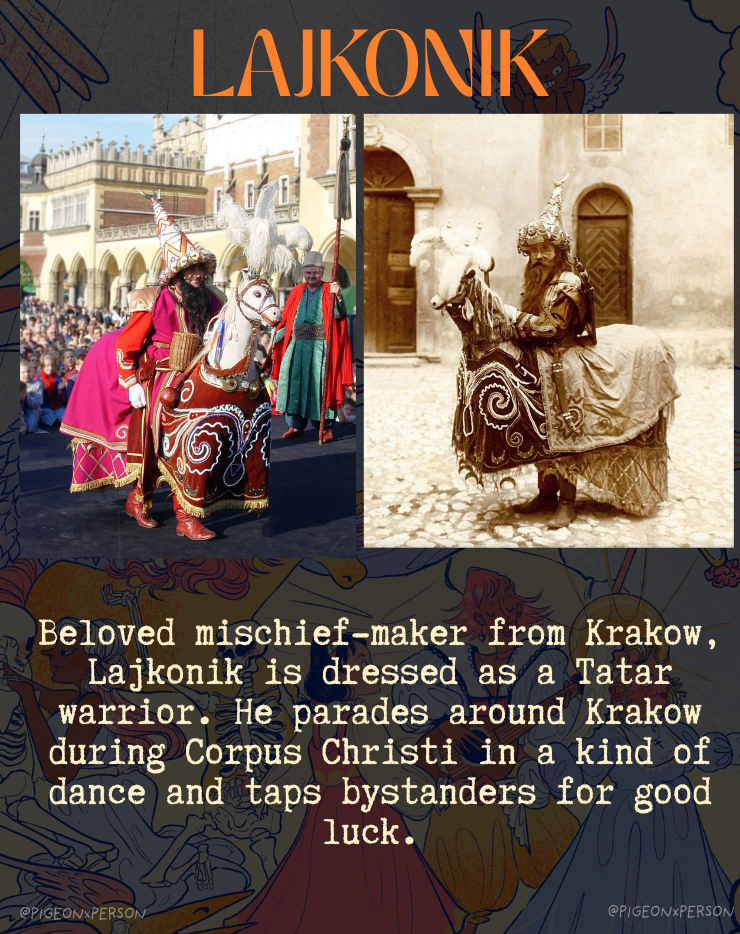
This week let’s find inspiration in the colourful carnival personalities! Playfulness and mischief lay at the core of many of the carnival personas, like Lajkonik or Turoń. The carnival has many purposes for the community too: it brings us closer together through silliness, play and festivities. It becomes the officially allowed make-believe for adults and kids alike.
What creature lives inside YOU?
DUAL BELIEF CONTINUES IN…THE CHRISTMAS CAROLERS:
We talked about the idea of dual belief and folk Christianity in the previous week. If you remember my musings, you’ll see that the Christmas Carolers costumes are a mixture of folk and Christian figures. This is of course another example of the church trying to appropriate the pre-Christian beliefs as its own, resulting in a dual-belief custom where the religious and the “pagan” intertwines.
Traditionally the Carol group would include an angel, devil, death, kings - characters known from the Bible - as well as folk characters like Dziad (old man), Death or Turon . Turoń is an especially endearing Caroler: a fuzzy creature who would run around and cause mischief among the people enjoying the Carols. The group often also carries a Bethlehem Star staff - a colourful folk craft in its own right. Together they wander from house to house, offering a song.
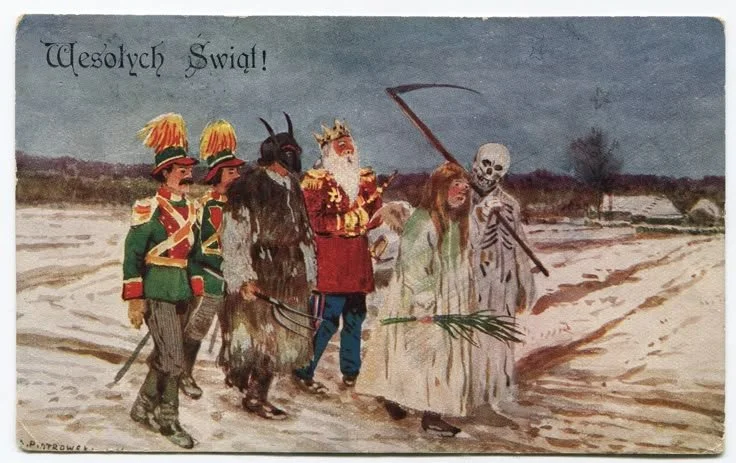
Vintage Christmas card depicting a group of Carolers.
MORE FOLK CARNIVAL CREATURES:
LAJKONIK AND DZIADY
DZIADY + MASZKARY:
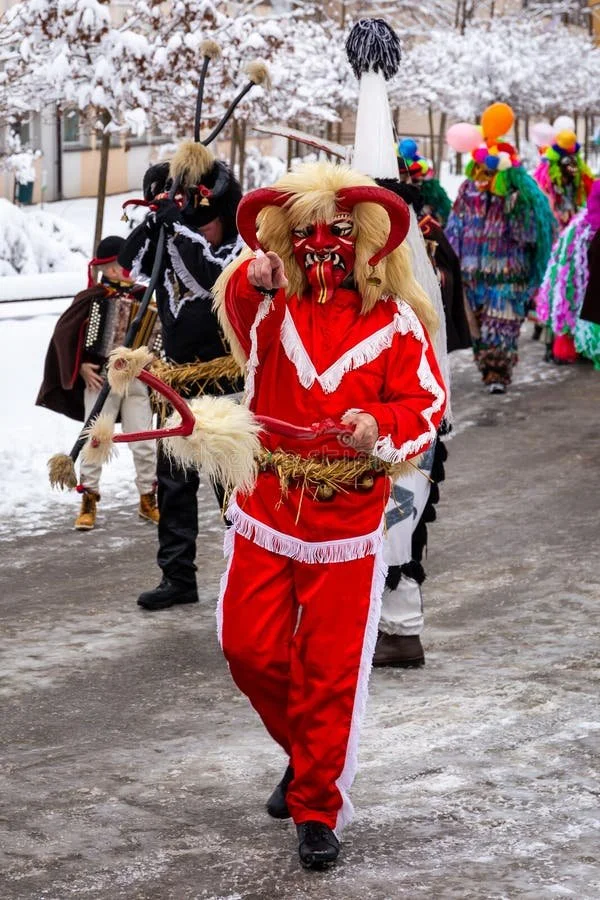
Dziady Parade in Gody Zywieckie. Source
The word Dziad - meaning old man - was used in the past for both wandering beggars and the community elders, believed to have contact with the afterlife. They were often folk singers, nomadic artists, important especially around the equinox (also labelled as “Dziady”, celebration of the ancestors).
Dziady and Maszkary (monstrosities) appear in some folk parades as magical and mischievous beings.
There’s no specific canon on how these creatures look like. Often they’re a mixture of folk devils and other fun monstrosities, wearing handmade horned masks and colourful clothing.
LOUD ENOUGH TO WAKE UP SPRING!
Carnival period in Catholic Poland started in early January and ended just before Lent. There were many reasons for this: carnival time would help folks get through the frosty and dark winter months, which were also a perfect time to party and play due to the work in the fields being over in between seasons. Our Slavic ancestors lived in synch with the seasons, and carnival was a time for play and celebration before welcoming spring.
The aforementioned Maszkary paraded towns and villages towards the end of the carnival. The job of the dressed up participants was to make some ungodly racket in order to wake up spring. Among them was Turon, the same fuzzy creature that joins the later Caroler tradition. As a wild animal, Turon represented strength and energy. But welcoming spring included more important rituals…
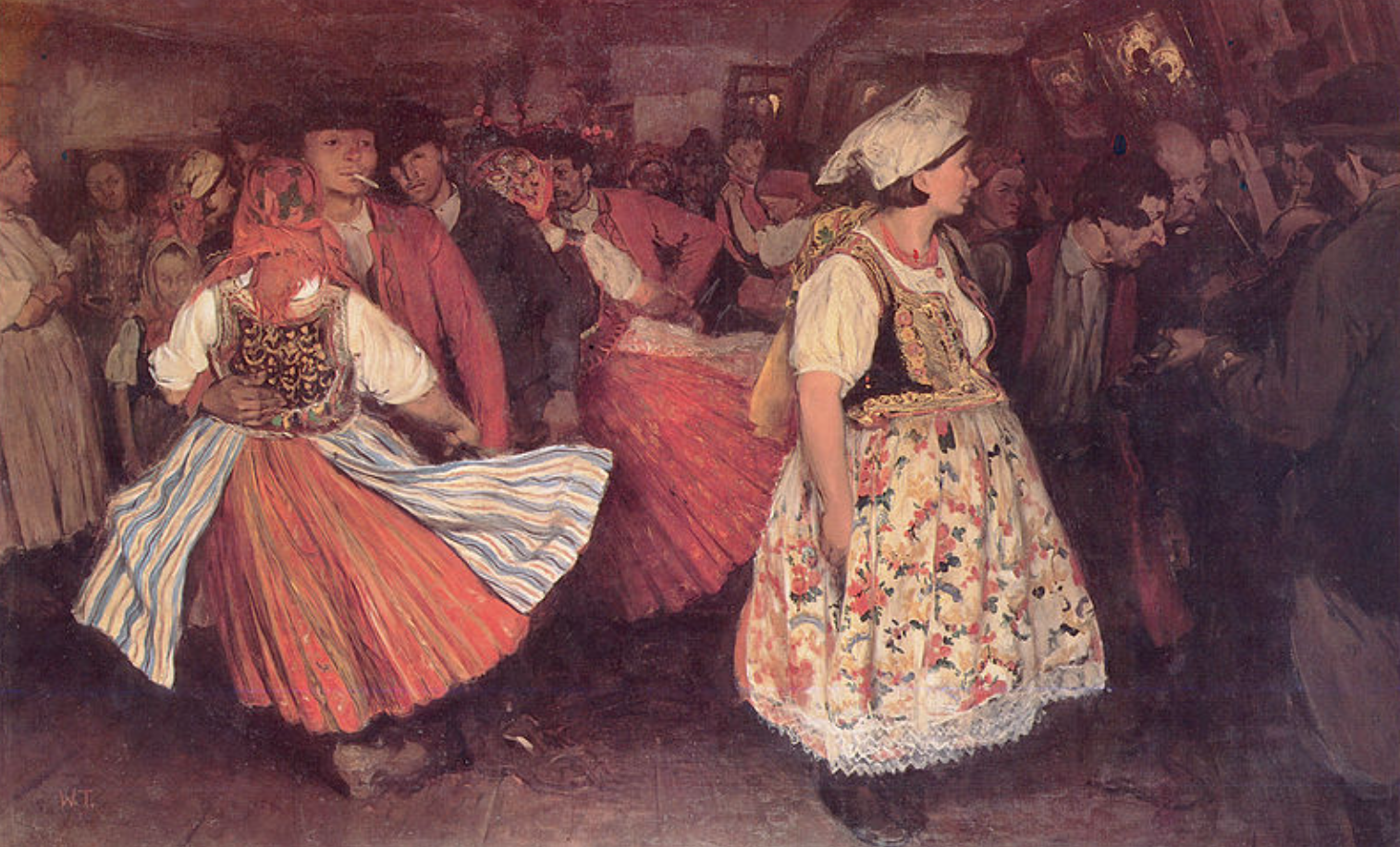
Tance w karczmie, painting by Przerwa-Tetmajer. Source here
MARZANNA: A DEITY OF CHANGING SEASONS

My interpretation of Marzanna as a Slavic deity, illustrated in 2022. Also available as an art print in my Pigeon Shoppe.
One of my strangest memories from going to school in Poland was going out with our teacher and fellow students to drown Marzanna. In our case, we would make small dolls out of rags and straw and drown them in the local river to welcome spring. It’s really quite incredible that this old, clearly pre-Christian custom has survived and is doing so well in Catholic Poland. Although believe me, the church spent hundreds of years trying to get rid of it! We just know that if you don’t drown (or, in some instances, burn) Marzanna, the spring just won’t come.
So who or what is Marzanna? A curious deity in Slavic folklore: she was once a powerful goddess of nature and winter time (also known as Morana or Morena), associated with concepts of death and rebirth. Her death at the end of winter is necessary to make space for the spring and the deities who are patrons of this time.
Despite getting her godly authority stripped from her, Marzanna lives on in this folk tradition, performed at the very end of carnival period and/or around spring equinox. In some places it turns into a parade, with special folk songs and costumes. A grand way to celebrate the changing seasons.
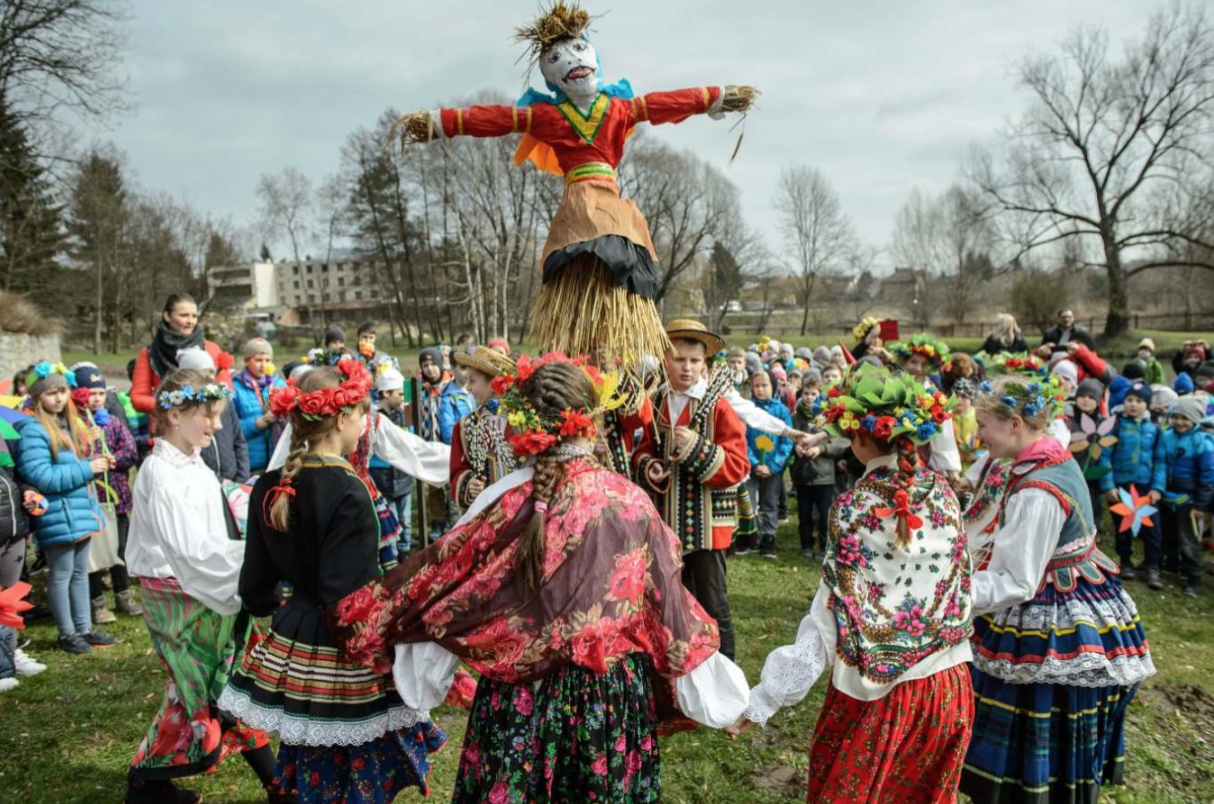
Marzanna parade in Poland. Source here.
AND NOW, IT’S YOUR TURN.
The interpretation of this prompt is entirely up to you.
What kind of creatures would attend your parade? What about the carnival draws you in?
Are you fond of folk devils, Turon-like fuzzy creatures or something entirely different? Why?
How can you creatively transform yourself or use costume to celebrate with your community?
What creature lives inside YOU?
JOIN US:
Share your creations online and remember to tag me and use the hashtag #slavtober - I’d love to see them!!